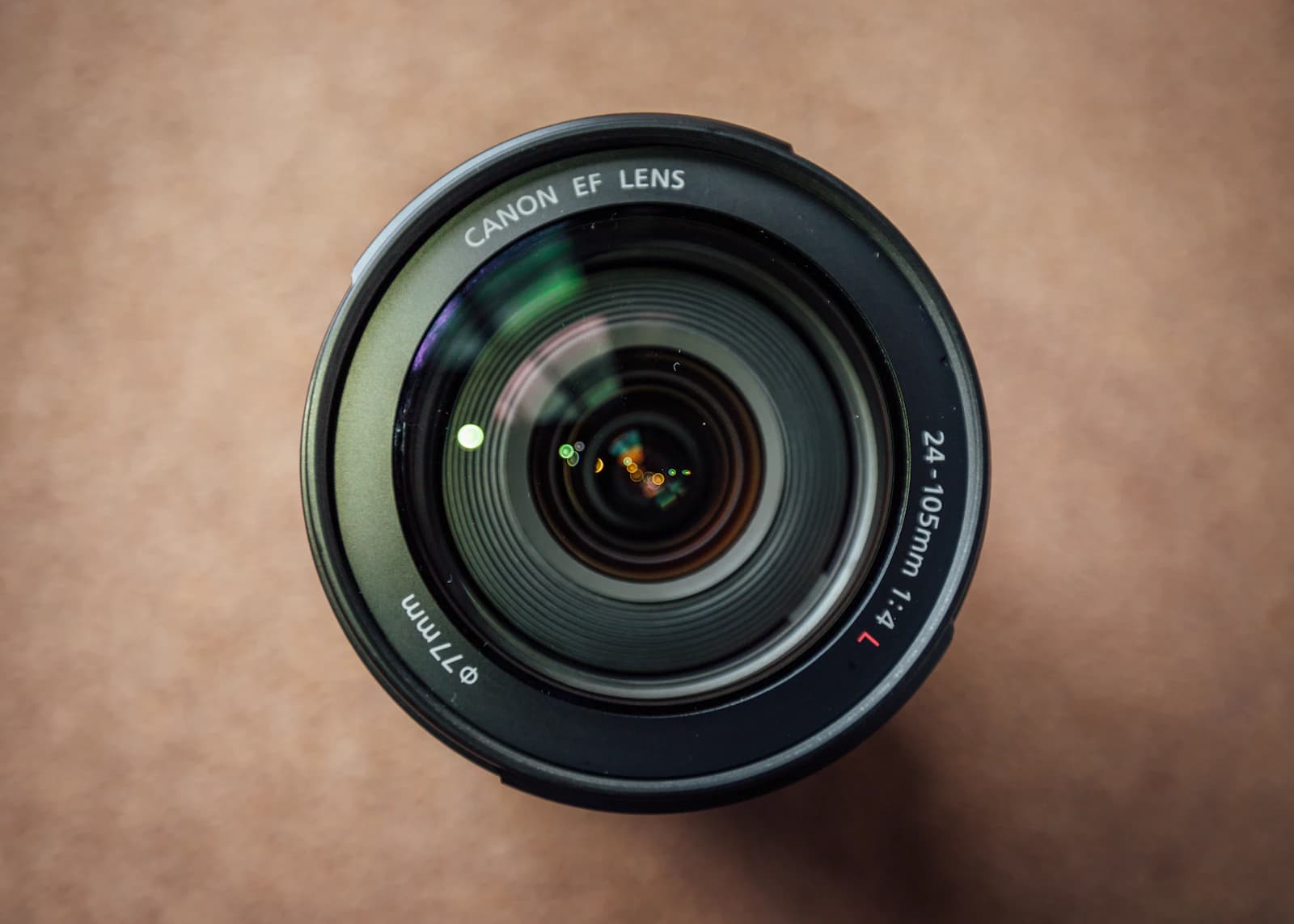
Lens shopping usually comes with the claim that "primes are sharper," but it's rarely clear exactly why, or how much that difference actually shows up in a real photo. The gap between a prime and a zoom isn't really about sharpness alone — maximum aperture, weight, and how well each handles a fast-changing scene all factor into which one actually makes sense for you.
The Structural Difference: Fixed vs. Variable Focal Length
A prime lens is built around a single focal length — 35mm, 50mm, 85mm, and so on — while a zoom packs several moving lens groups into one barrel so the focal length can shift continuously between two points. That one structural choice is the root of nearly every other difference in aperture, sharpness, and weight that follows.
Maximum Aperture and Low-Light Performance
Because a prime only has to correct for one focal length, manufacturers can build in a wide maximum aperture (f/1.4, f/1.8) without stacking on as many corrective elements as a zoom needs across its whole range. A zoom that wants to hold f/2.8 from end to end needs far more complex optical correction, which drives up both size and price. Compare a 50mm f/1.8 prime to a 24-70mm f/2.8 zoom: the roughly two-stop gap means the prime can shoot at a shutter speed four times faster, or an ISO one-quarter as high, for the same exposure. In a dim cafe where the zoom is barely holding still at ISO 6400, the same shot at f/1.8 might only need ISO 1600.
Sharpness and Optical Quality
At a comparable price point, primes tend to be sharper wide open, with less vignetting and distortion, because the whole optical design is optimized around one focal length instead of compromising across many. Zooms can lose resolution at specific points in their range — often the long end — where the correction is weakest. That gap isn't absolute, though: modern high-end zooms use aspherical elements and stabilization that narrow the difference to the point where "primes are always sharper" mostly holds for budget zoom glass rather than professional-grade lenses.
Weight and Portability
Fewer moving elements make primes lighter — a 50mm f/1.8 typically weighs around 160g, while a 24-70mm f/2.8 zoom often tops 800g. That said, a single zoom covering several focal lengths can weigh about the same as carrying three or four primes that cover the same range separately, so the real-world weight comparison depends on how many lenses you'd actually need to pack for the trip.
Where Zooms Win: Adapting on the Fly
For shooting where there's no time to swap lenses between focal lengths — weddings, events, sports, chasing a kid around a backyard — a zoom's flexibility is decisive. There's no risk of missing a moment mid-swap, and less chance of dust reaching the sensor. Matching that flexibility with primes means either carrying multiple bodies with different lenses mounted, or constantly swapping glass mid-shoot, which gets impractical fast once you're actually working.
Matching the Lens to the Situation
Choose a prime when you want maximum background blur, need to shoot handheld in low light, or want to push image quality as far as possible at one specific focal length. Choose a zoom for travel, events, and documentary work, where the scene changes faster than you can react. On a limited budget, starting with an affordable prime like a 50mm f/1.8 is a reasonable way to experience wide-aperture shooting and image quality before expanding into a zoom's broader range.
Practical Checklist
- If you shoot indoors in low light often, check whether an f/1.4-f/1.8 prime lets you drop ISO while still holding a usable shutter speed.
- If lens-swapping time is costly on set, an f/2.8 standard zoom (24-70mm-class) is the more practical starting point.
- At a similar price, compare wide-open sharpness between a prime and a zoom using MTF charts from lens review sites.
- For travel where pack weight matters, weigh a zoom against the primes it would replace before deciding.
- For portraits where background blur is the priority, aperture is the variable that matters most — lean toward a prime in the f/1.4-f/1.8 range.