What kind of photos do you want to take? What do you want to put into your photos?
Even in front of the same scene, each person wants to capture something different. Some capture the light, some capture how people look, some capture the air of that day. In this post I put the same photo side by side, retouched in two different ways. The shooting settings are identical, but the mood is completely different. Read while comparing the left (A) and the right (B).
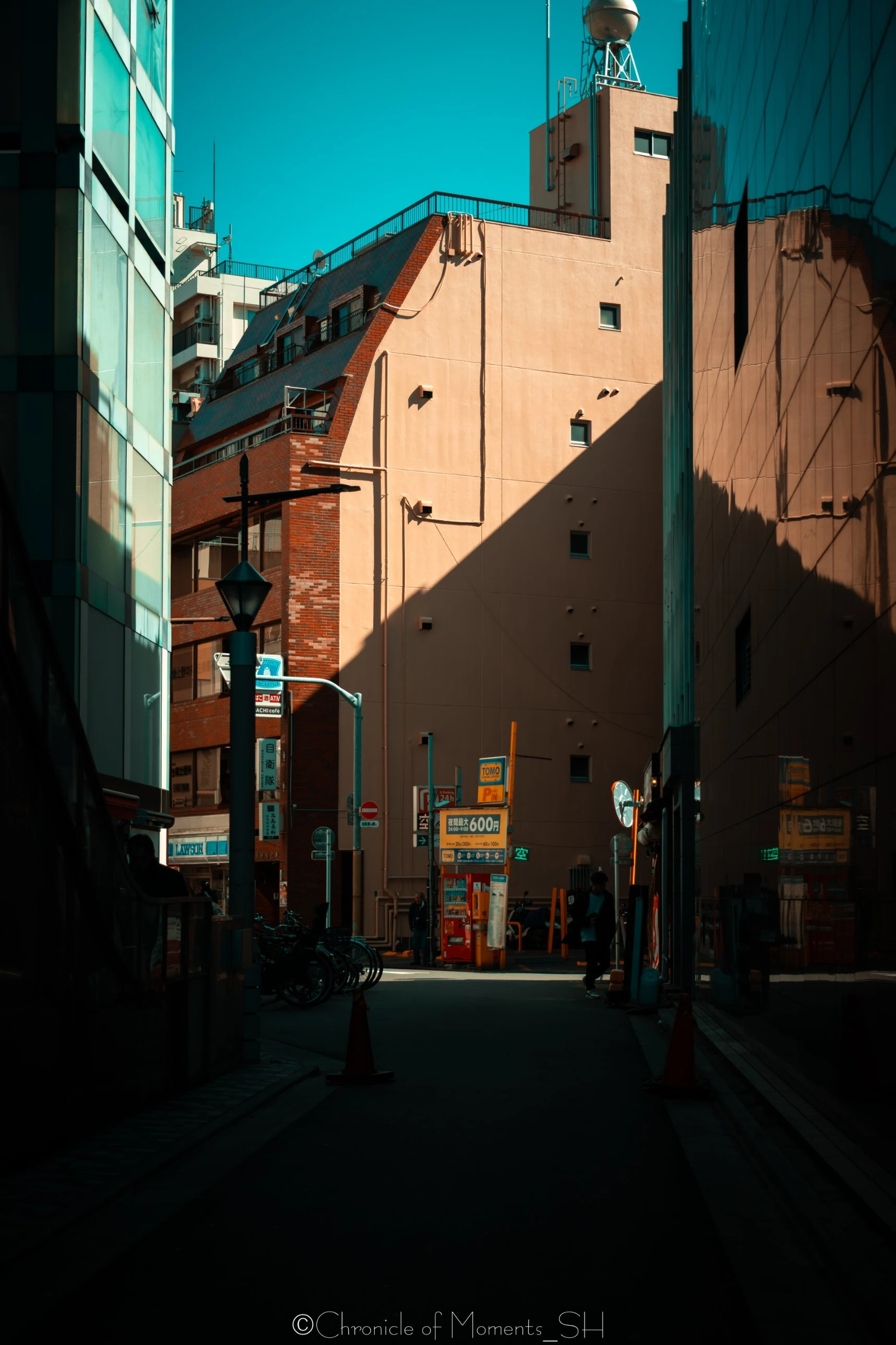
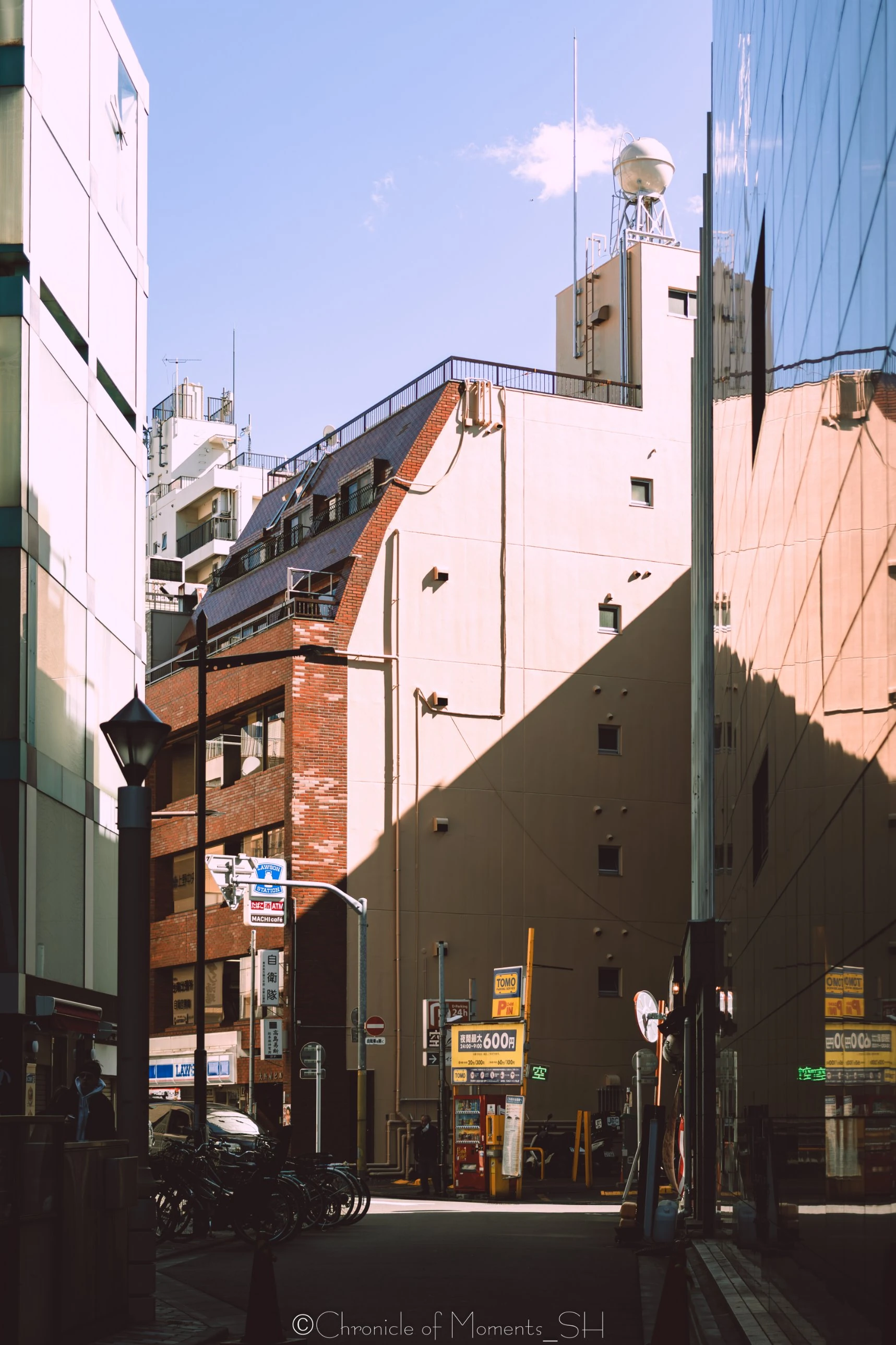
Canon EOS 800D · EF40mm f/2.8 STM · 40mm · F2.8 · ISO 100 · 1/2000 s · 2024-03-10
(Click the photo to view it at full size)
In A, I sank the sky into a deep teal and brought out the orange of the building walls to emphasize complementary-color contrast. The shadows are kept deep, so the surfaces the light touches stand out more. In B, I loosened the sky into a pale sky-blue and lavender tone and opened the shadows. The signs and objects deeper in the alley are clearly visible, and the whole thing has a soft, film-like feel. If A shows the contrast between light and shadow, B shows the details and atmosphere of the alley.
Intent Starts the Moment You Press the Shutter
What are you thinking about when you press the camera shutter?
Intent starts not at the retouching stage but before you press the shutter. What composition you will use, whether to preserve the bright sky or keep the dark areas, and at which moment to press are all intent. Retouching is only the last stage laid on top; it does not create intent from scratch.
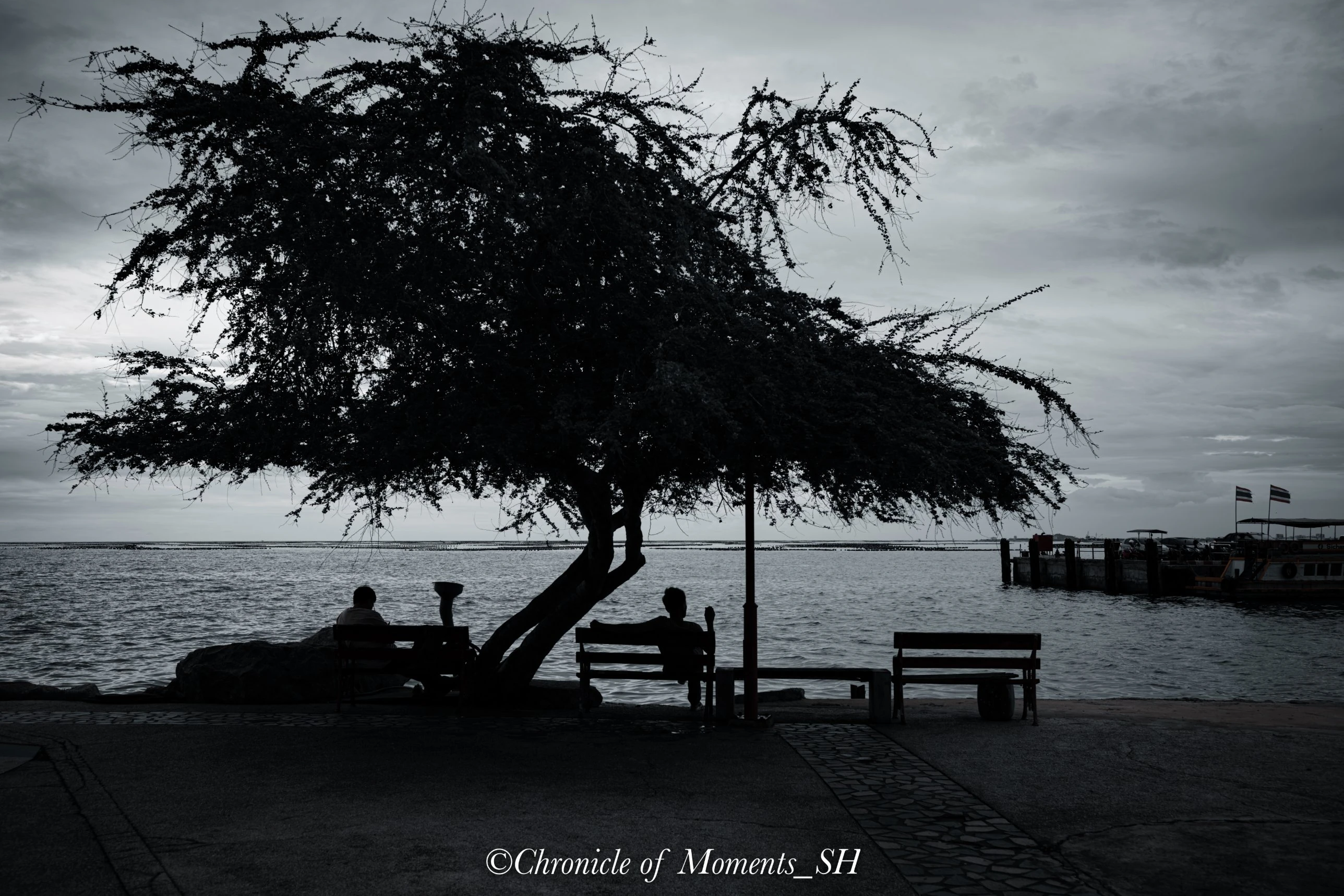
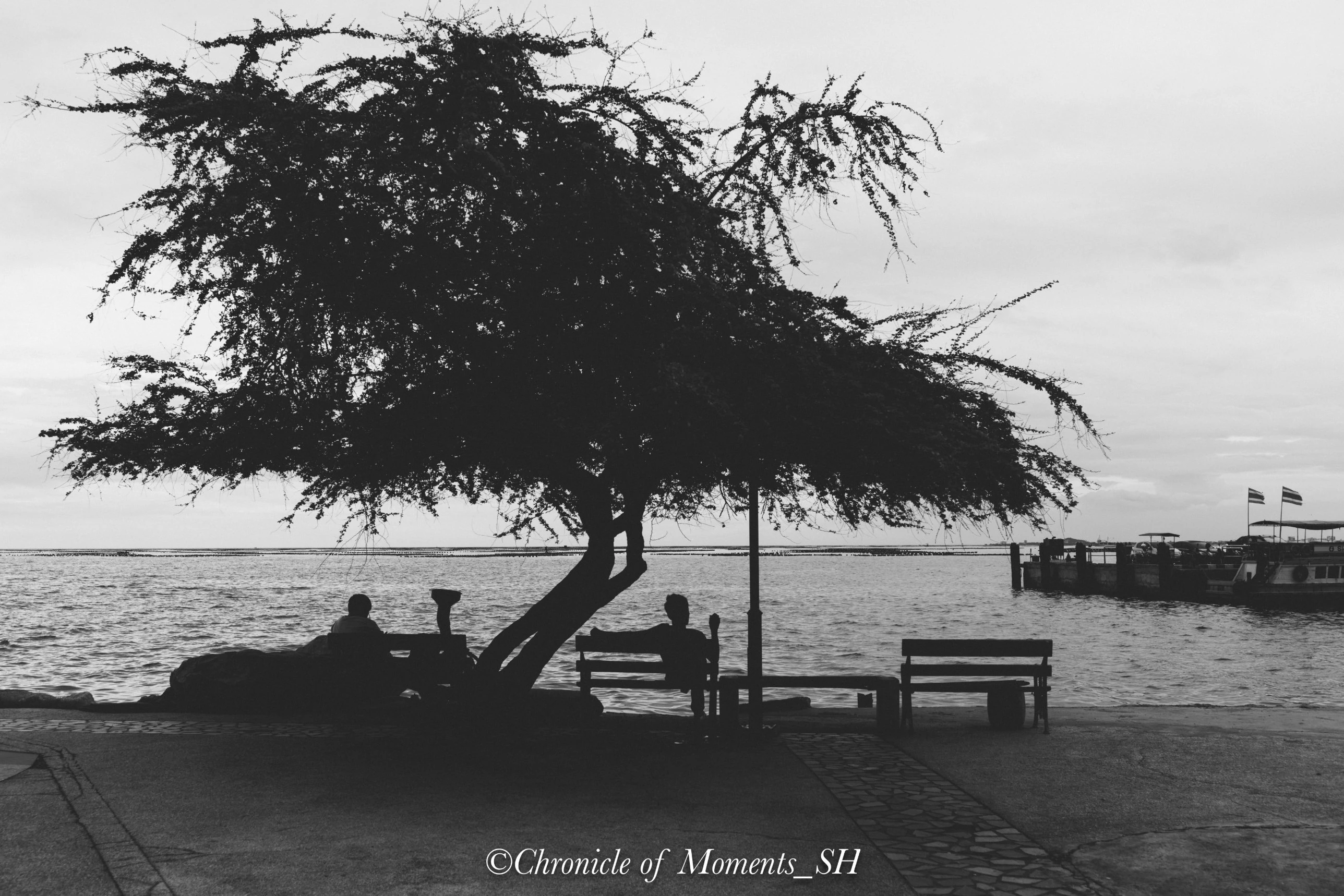
Canon EOS R5 Mark II · RF15-35mm F2.8 L IS USM · 35mm · F5.6 · ISO 50 · 1/200 s · 2025-09-02
(Click the photo to view it at full size)
Both photos are black-and-white images where the tree and the people remain as silhouettes. In A, I pressed the overall tone down, so the texture of the clouds and the outline of the tree come alive heavily and a cool blue feeling spreads. In B, I opened the sky bright, which gives a light and quiet feeling. Same silhouettes, but A is dramatic and heavy, and B is calm.
Making the Intent Known Is the Photographer's Job
Only the photographer who presses the shutter can know the intent of a photo, but making that intent known to many people is entirely the photographer's role and something they must work at.
Viewers cannot know what the photographer felt; they only see the result. So you have to convey the intent through visual cues such as color, brightness, and contrast. Retouching is not turning a photo into something else; it is closer to refining the photo so that what the photographer felt reaches the viewer.
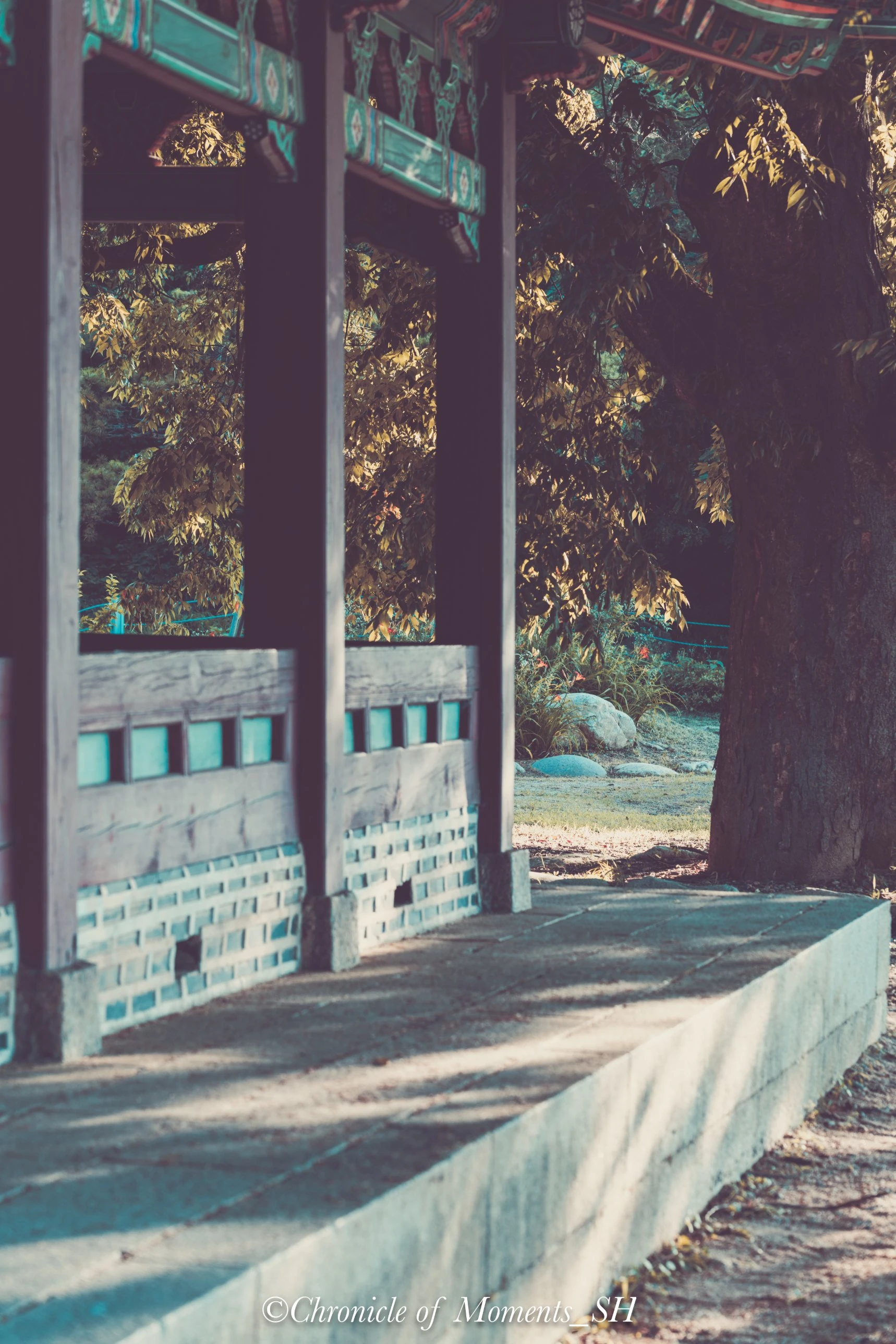
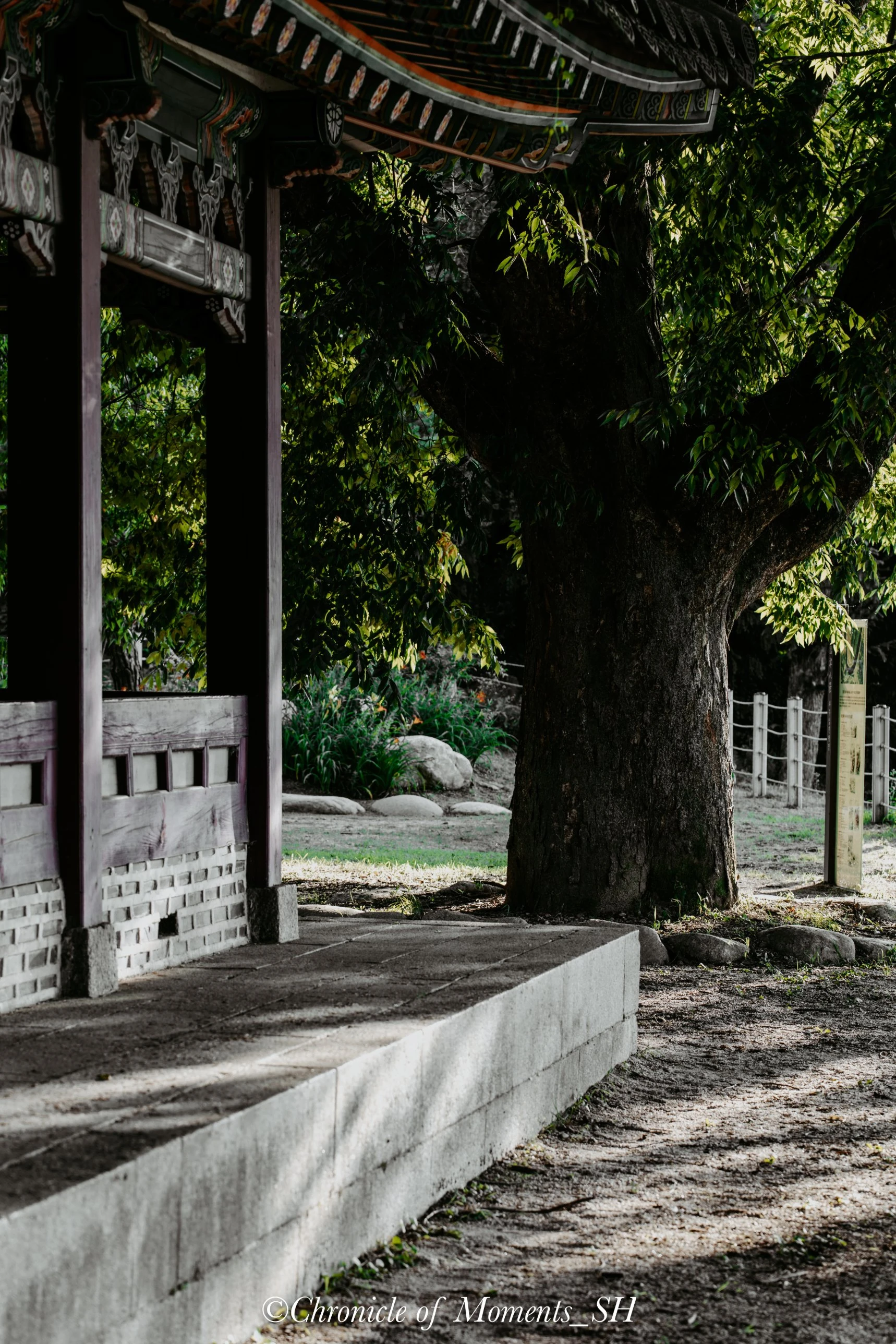
Canon EOS R5 Mark II · RF100mm F2.8 L MACRO IS USM · 100mm · F5.6 · ISO 100 · 1/30 s · 2025-07-12
(Click the photo to view it at full size)
In A, I took color out to make a faded vintage tone. The columns sink into purple, and only the yellow of the leaves and the teal wall remain, faintly. It gives a calm impression, like a scene from an old memory. B brings out the green of the leaves and the texture of the tree trunk for a vivid sense of being there. Same pavilion, but A looks like a memory, and B looks like a scene right in front of you now.
How Retouching Changes the Mood
The same result can have a different mood depending on how it is retouched. The factors that decide the mood can be broadly divided into a few.
| Retouch element | If you do this | You get this mood |
|---|---|---|
| Color temperature (white balance) | Make it bluer | Cold, quiet feeling |
| Color temperature (white balance) | Make it yellower | Warm, cozy feeling |
| Contrast (tone curve) | Raise it | Dramatic, intense feeling |
| Contrast (tone curve) | Lower it | Soft, calm feeling |
| Saturation | Raise it | Vivid, lively feeling |
| Saturation | Lower it | Vintage, lonely feeling |
| Shadows and highlights | Brighten the shadows | Details show, light feeling |
| Shadows and highlights | Leave the shadows dark | Depth and weight |
| Color grading | Tint highlights and shadows with different colors | Cinematic color |
| Vignetting | Darken the edges | The eye gathers toward the center |


Canon EOS R7 · RF15-35mm F2.8 L IS USM · 35mm · F2.8 · ISO 100 · 1/400 s · 2025-05-08
(Click the photo to view it at full size)
In A, the blue of the sea contrasts with the warm brown of the sand, and the edges are faintly dark, so the eye gathers on the coconut. In B, the sand and the coconut are both unified into reddish tones, and the sea sinks like white mist, which is much softer and dreamlike.
By the way, EXIF records only shooting information such as shutter speed, aperture, and ISO, and does not keep retouching values. That is why A and B in this post share the same shooting information. You can check shooting information right away by uploading a photo to ExifLens.
Things Worth Deciding Before You Retouch
- Write your intent in one sentence. Short is fine, like "a lonely evening sea" or "contrast between light and shadow." With a direction, your retouching won't wobble.
- Change one thing at a time. If you adjust in the order color temperature, contrast, saturation, you can tell what changed the mood.
- Keep the original (RAW). Retouching should always be reversible.
- Check with the histogram. You can see whether highlights are blown to white or shadows are crushed.
- Take time and look again. Looking the next day, you'll see the parts that were overdone.
- Make the same photo two ways and compare. Placing them side by side as in this post makes the mood you want clearer.
What Mood Do You Want to Create?
I hope you'll think about what photos, what intent, and what mood you want to create.
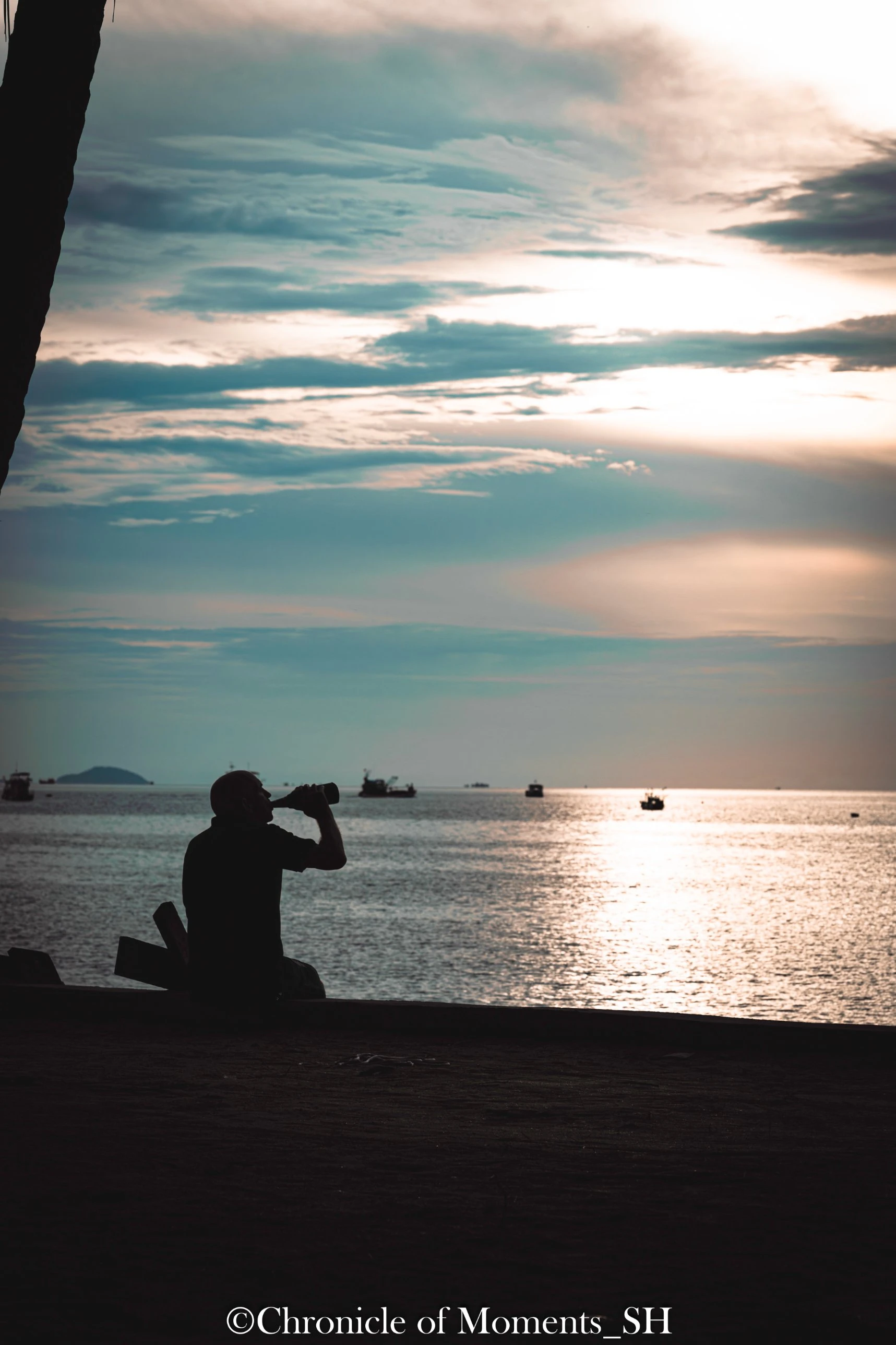
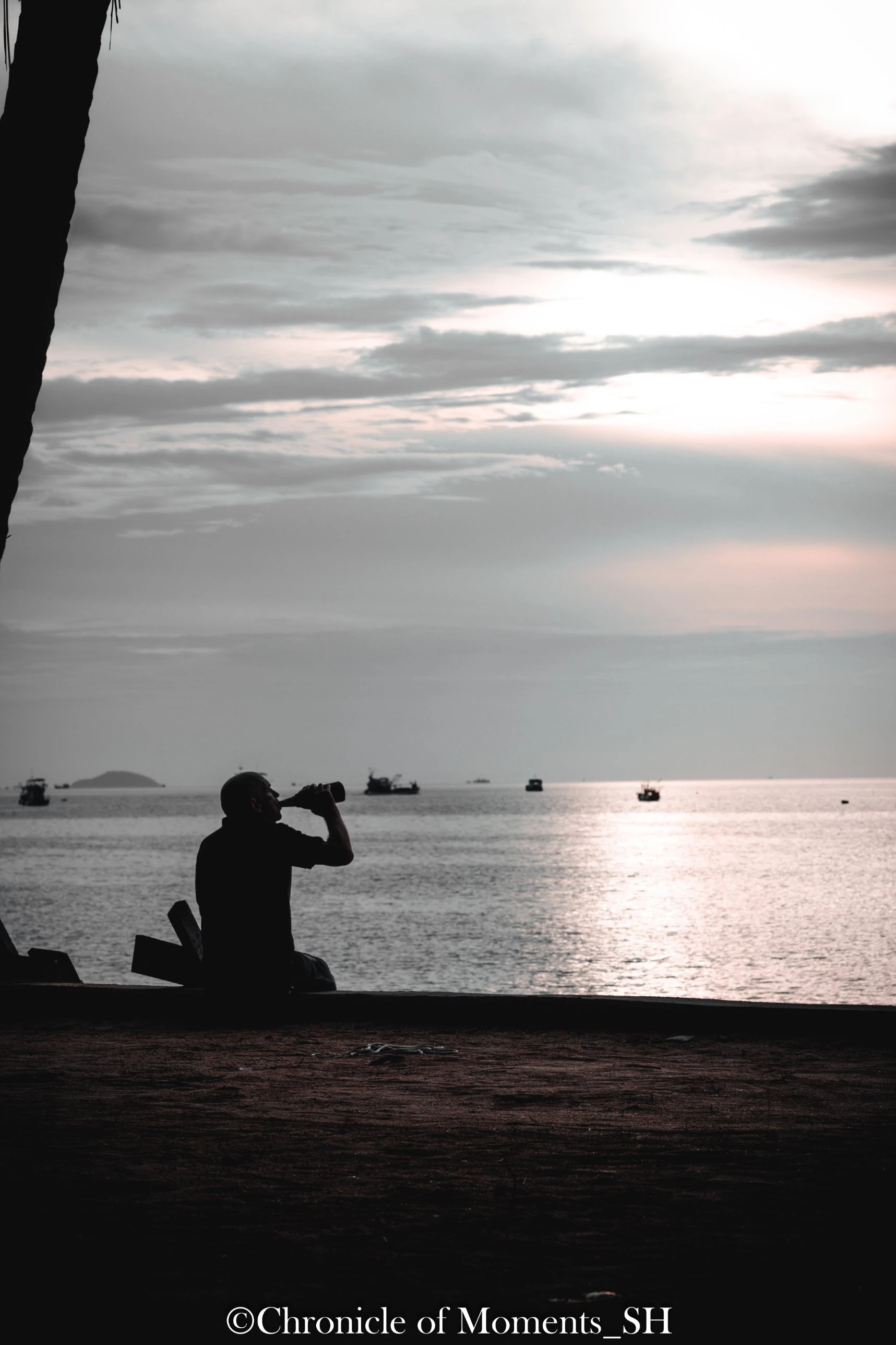
Canon EOS R7 · RF24-70mm F2.8 L IS USM · 57mm · F5.6 · ISO 100 · 1/160 s · 2025-05-16
(Click the photo to view it at full size)
In A, the teal of the clouds at sunset contrasts with the warm sunlight, so the colors are rich. In B, I lowered saturation, and the sky sinks into a pinkish gray, and the same person looks much quieter and lonelier. Which do you like better? There is no right answer. The right answer is the one that fits the mood you want to convey.
FAQ
Doesn't retouching make a photo fake?
Digital cameras already process color and contrast when they make a JPEG at the shooting stage. Retouching is the photographer making that choice directly. However, for photos where facts matter, such as documentation or news, it is better to avoid heavy retouching.
Which retouch is the right answer?
There is none. The standard is whether the intended mood reaches the viewer.
If I'm just starting to retouch, where should I begin?
Start by adjusting exposure, white balance, and contrast. Those three alone change the mood a lot.
Are retouching values saved in EXIF too?
No. EXIF records shooting information such as camera, lens, shutter speed, aperture, and ISO. Retouching values are managed separately in the editing program.
Putting It Together
- The same scene gets a different mood depending on color temperature, contrast, saturation, and the brightness of shadows.
- What matters is not technique but "what do you want to convey?"
- Decide your intent first, before you press the shutter and before you retouch. Then the same photo can be finished in the mood you want.
Copyright Notice
All photos used in this post are works taken directly by the site operator (Chronicle of Moments_SH). Photographs are protected as photographic works under Article 4(1)(ix) of the Korean Copyright Act, and copyright arises from the moment of shooting without any registration or other procedure (Article 10(2)).
Without the copyright holder's prior permission, it is prohibited to reproduce the photos in this post (Article 16), to post or transmit them on blogs, forums, social media, or communities (public transmission, Article 18), or to modify or edit them into derivative works (Article 22). Removing or altering the copyright notice and frame in a photo can also infringe the right of attribution (Article 12) and the right to integrity (Article 13). Uses the law permits, such as fair quotation of a published work (Article 28) or use within a private or domestic scope (Article 30), are exceptions.
Unauthorized use can lead to injunction claims (Article 123) and damages claims (Article 125), and can be punished by imprisonment of up to 5 years or a fine of up to 50 million won (Article 136(1)). For-profit or habitual infringement can be punished even without a complaint (Article 140).
Photo-use inquiries: skysmoga@gmail.com
© Chronicle of Moments_SH. All rights reserved.