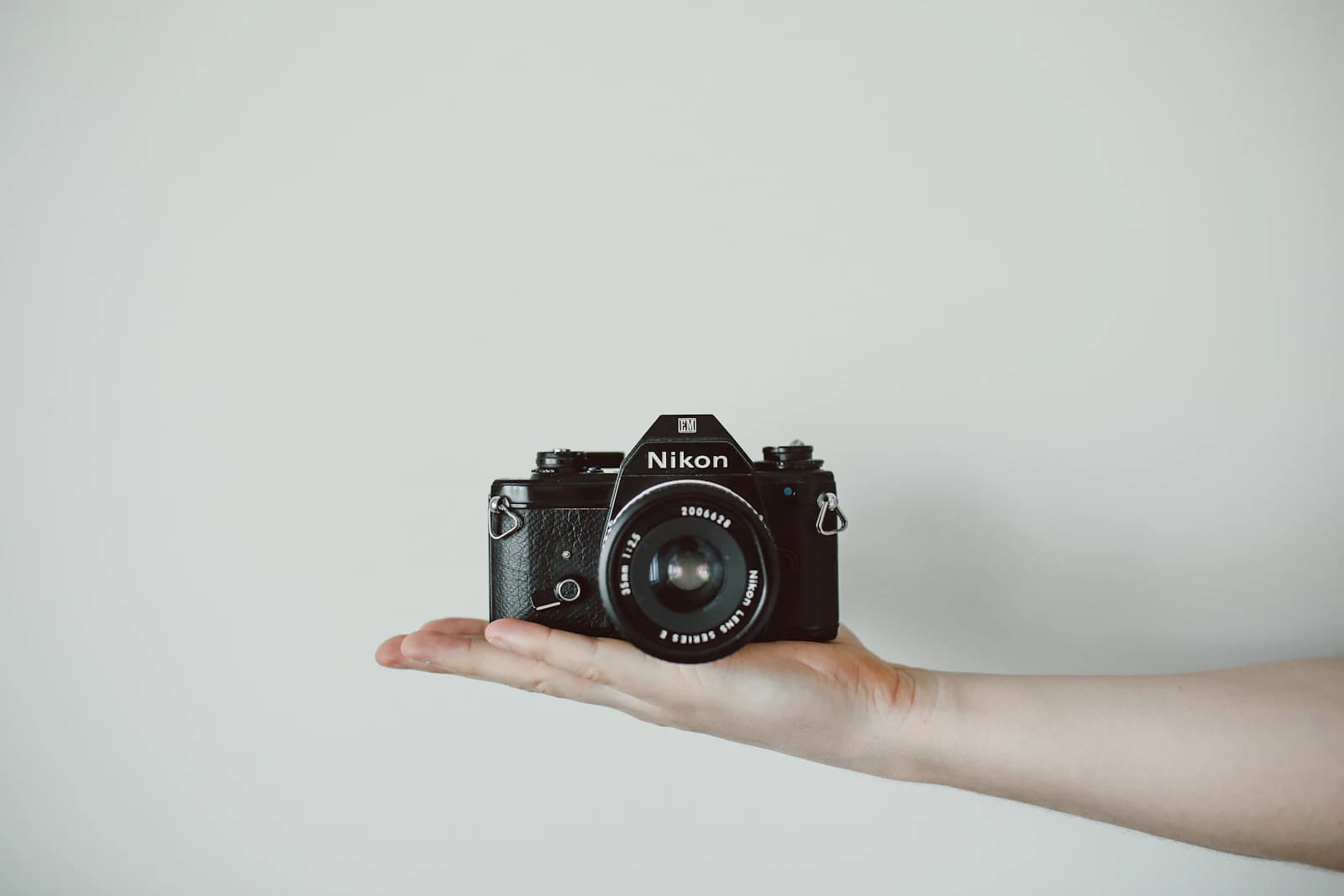
A lens recommendation written for full-frame cameras doesn't carry over cleanly to a crop-sensor body — the same 35mm lens that sits in the "just right" general-purpose range on full frame turns into something closer to a 50–56mm field of view on APS-C, and a 70mm one effectively behaves like 105–112mm. Before buying a lens based on a focal length someone else recommended, it's worth running the actual numbers through our Crop Factor Calculator rather than guessing, because the gap between "on the box" and "in the viewfinder" only gets wider the farther you move from a standard zoom.
Why the focal length printed on the lens isn't the field of view you'll get
Crop factor is simply a ratio between your sensor's size and a full-frame sensor's size — common values are 1.5x for most Nikon/Sony/Fujifilm APS-C bodies, 1.6x for Canon APS-C, and 2x for Micro Four Thirds. A lens's actual focal length never changes between bodies; what changes is how much of its projected image your smaller sensor captures. Plugging your camera's crop factor and a candidate lens's focal length into the calculator gives you the full-frame-equivalent field of view instantly, which is the number you should actually compare against a recommendation, not the number printed on the lens barrel.
An everyday kit lens needs a different range on a crop body
If a friend recommends a 24–70mm lens because it covers "everything from wide group shots to portraits" on their full-frame camera, that advice doesn't transfer directly to your APS-C body. Run 24mm and 70mm through the calculator at 1.5x and you'll see you actually want something closer to a 16–47mm zoom to match that same coverage — which is exactly why standard crop kit zooms are usually sold as 18-55mm rather than 24-70mm; at 1.5x, that range already works out to roughly 27–82mm equivalent, landing in the same "normal" walk-around territory.
Hitting the classic portrait look on a crop body
An 85mm prime is the standard full-frame portrait recommendation for its flattering compression and background separation. On a 1.5x crop body, you don't need an 85mm to get that same look — a 50–56mm lens already delivers roughly the same field of view and compression. This is also why many "crop-specific" fast primes are sold as 35mm rather than 50mm: a 35mm on a 1.5x body behaves like a 50-something on full frame, the genuinely "normal" perspective, not a portrait-length one.
Wide-angle and landscape lenses have to go wider than intuition suggests
A 16mm lens that reads as a dramatic ultra-wide on full frame becomes roughly a 24mm field of view on a 1.5x crop body — useful, but no longer "ultra-wide" in any meaningful sense. To get a genuine 16mm-equivalent field of view on that same crop body, you need a lens closer to 10–11mm, which is exactly why crop-specific ultra-wide zooms are commonly sold starting at 10mm or 11mm instead of 16mm. If a landscape shooter you follow recommends their 16mm full-frame lens, don't buy a 16mm for your crop body expecting the same shot.
Crop-specific lenses vs. full-frame lenses on a crop body
Lens lines built specifically for crop sensors (Canon EF-S, Nikon DX, Fujifilm X, Sony E crop-format lenses) already have the crop math baked into their stated focal length, and tend to run smaller and cheaper than their full-frame counterparts. Mounting a full-frame lens on a crop body works fine optically — the image circle is simply larger than your sensor needs — but it means carrying the extra size, weight, and cost of covering a sensor you don't have. The one case where that trade-off makes sense is if you're deliberately buying full-frame-compatible lenses now because you're planning to upgrade the body later.
A common mistake: assuming a "nifty fifty" frames the way it does on full frame
A 50mm f/1.8 is often recommended as a first prime because of how it behaves on full frame — a natural, slightly-wide-of-normal perspective good for a range of subjects. Mounted on a 1.5x crop body, that same lens delivers roughly a 75mm field of view: noticeably tighter, better suited to head-and-shoulders portraits than to group shots or cramped interiors. Before buying a "standard" prime based on its reputation, check the calculator for the field of view your specific body will actually give you.
Practical checklist
- Before buying a lens based on someone else's full-frame recommendation, run your camera's crop factor and that lens's focal length through the Crop Factor Calculator.
- For genuine ultra-wide coverage on a crop body, look for lenses noticeably shorter than 16mm — closer to 10–11mm.
- To match the classic 85mm portrait look at 1.5x crop, look at 50–56mm lenses instead.
- Crop-specific lens lines (EF-S, DX, X-mount, crop E-mount) already bake the equivalent math into their stated focal length; a full-frame lens works but adds unneeded size and cost unless you're planning a future body upgrade.
- Don't assume a "50mm" or "35mm" behaves the same across sensor sizes — check the equivalent field of view before you buy.