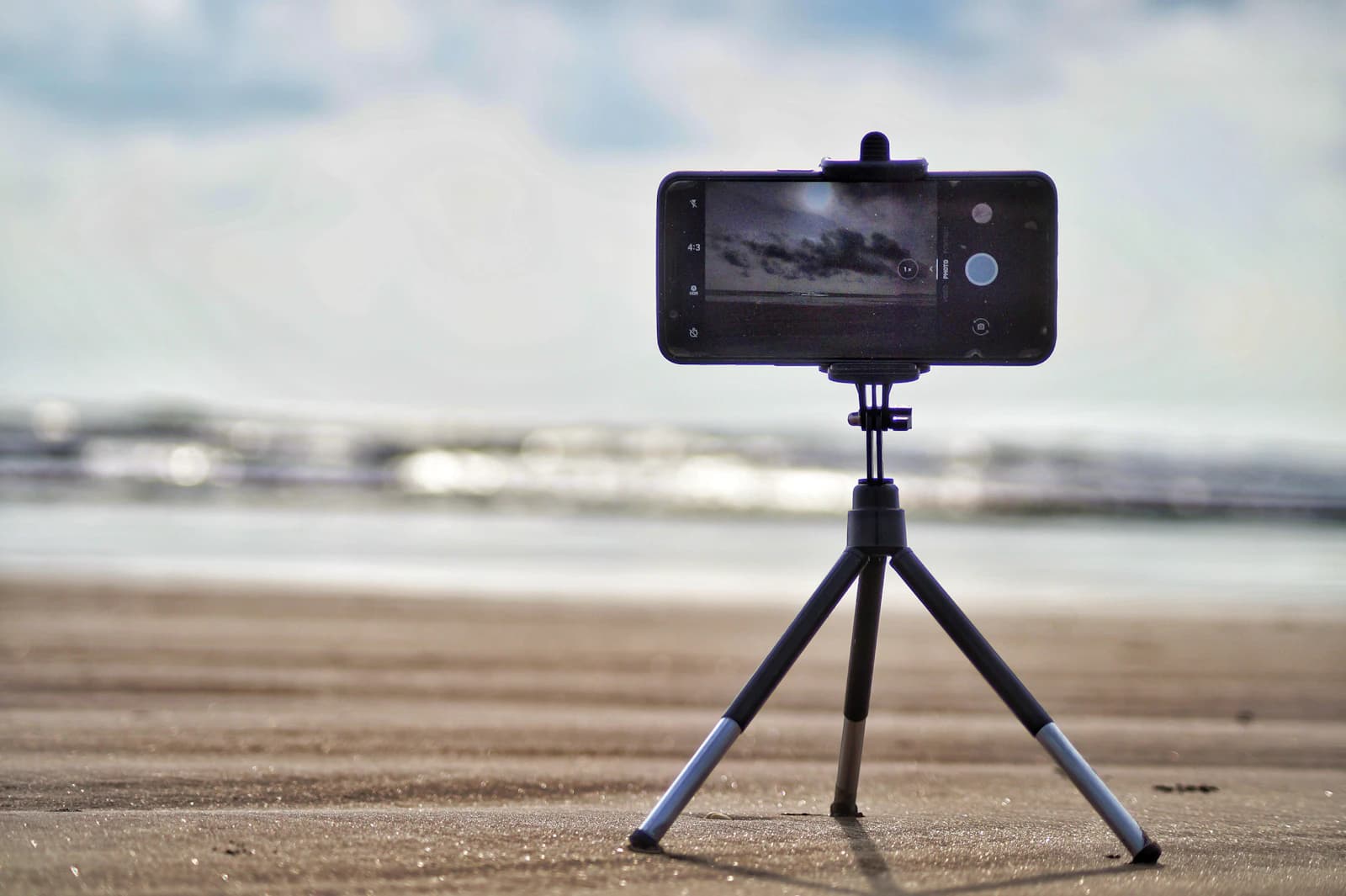
The most common mistake when shopping for a tripod is comparing only "max height" and price. What actually separates a good tripod from a mediocre one lives in the fine print further down the spec sheet: load rating, how the leg material dampens vibration, and how the head locks down. This matters even more if you shoot long exposures with an ND filter, where a few seconds to several minutes of exposure means even a tiny amount of shake can ruin the whole frame.
Load rating: trust half of the advertised number
The "maximum load" a manufacturer lists is closer to a lab figure — how much weight the tripod can hold while perfectly still. In real shooting, wind, shutter vibration, and a shifting center of gravity all add up, so it's safer to keep your actual gear weight within 60-70% of the advertised rating. A camera body (800g) paired with a 70-200mm lens (1.5kg) comes to roughly 2.3kg, which means you'd want a tripod rated for at least 3.5-4kg to have real margin. Front-heavy setups like telephoto lenses need even more headroom than that.
Leg material: what aluminum vs. carbon fiber actually changes
At the same load rating, aluminum tripods typically run 1.8-2.2kg while carbon fiber models come in around 1.1-1.5kg. If weight were the only variable, the lighter option would always win, but the two materials also dampen vibration differently. Micro-vibrations from wind or handling take longer to settle on aluminum legs, while carbon's inherent damping properties bring them to a stop faster. If you regularly shoot exposures of 10 seconds or longer, that difference shows up directly in sharpness, so carbon is worth the premium if your budget allows it. That said, carbon models often cost 1.5-2x more than an equivalent aluminum tripod, so there's no need to insist on carbon for mostly indoor studio work.
Leg sections and multi-angle hinges
Whether a tripod has 3, 4, or 5 leg sections matters more than it looks. Fewer sections (3-4) mean thicker, more rigid leg segments but a longer folded length that's harder to pack. More sections (5) improve portability but add joints, which can introduce a bit more flex. For travel, a 5-section tripod usually makes more sense; for landscape and long-exposure work, 4 sections or fewer is the safer default. A multi-angle leg hinge — one that locks at several fixed angles — also matters more than it seems once you're shooting on uneven rock, a slope, or need a low angle for macro work.
Head type: ball head vs. pan-tilt head
A ball head moves freely in every direction from a single lock, which suits landscape and travel shooting where you're recomposing quickly. A pan-tilt head controls horizontal and vertical movement with separate knobs, which is slower but makes it easier to nail a precise horizon for panoramas or architecture. Whichever you choose, check that the quick-release plate follows the Arca-Swiss standard — plates built to that standard are cross-compatible with other brands' heads and L-brackets, so you won't need to buy a new plate every time you upgrade gear.
The center column trade-off
Extending the center column fully gets you more height, but it puts your camera's weight above the tripod's actual support structure, which makes the whole rig more prone to shake. For long exposures outdoors in any wind, keeping the center column fully down and relying on leg height alone for your composition is noticeably more stable. If you shoot macro or product photography often, look for a model where the center column can go horizontal or detach entirely — it makes low, ground-level angles much easier to reach.
Matching a setup to what you actually shoot
For long trips or hiking, a sub-1.5kg 5-section carbon tripod paired with a compact ball head keeps the load manageable. For landscape and long-exposure work, accepting some extra weight in exchange for sturdier 4-section (or fewer) legs and an Arca-Swiss ball head pays off in vibration control. For indoor portrait or product work, portability matters less than how precisely you can adjust framing, so a pan-tilt or geared head is worth considering alongside center-column flexibility.
Practical checklist
- Add up the actual weight of the camera and lens you'll mount, and confirm it stays within 60-70% of the tripod's rated load.
- If you regularly shoot exposures of 10 seconds or longer, prioritize carbon fiber and fewer leg sections.
- Before buying, confirm the quick-release plate follows the Arca-Swiss standard.
- In windy outdoor conditions, keep the center column down and adjust height with the legs instead.
- If the tripod has a hook, hang your camera bag from it to lower the center of gravity and cut down on shake further.
- Check the folded length against your actual bag size before you buy, not after.