Have you ever agonized over which lens to pack before a trip? A single zoom lens seems like it would solve everything, but a small, light prime also seems like a better fit for travel. This post is a record of what happened when I took just one prime lens on my first trip abroad.
Looking at 14 photos from the trip together with their EXIF, I'll talk about what was good and what was disappointing about a prime on a trip. The compositions aren't perfect, but I hope they serve as a real example for anyone choosing a lens.
When I Started with a DSLR Knowing Nothing
I started with a DSLR camera knowing nothing. I didn't know which camera was good or how to choose lenses, so I bought a new entry-level Canon EOS 800D, and along with the kit lens (the basic lens sold bundled with the camera) I additionally bought an EF40mm F2.8 STM prime.
But after buying them I didn't know how to use them, so I just left the camera alone for a while. It was a time when I had a camera but didn't know what to shoot or how.
Why I Took Only One Prime on My First Trip Abroad
Then I got to go on my first trip abroad. I wanted to pack as light as possible, so I left the kit zoom behind and decided to take only the small 40mm prime. It is small and flat, so it's nicknamed a pancake lens.
Looking back now, the kit zoom doesn't look that big either, but at the time it felt quite large. If I could fit only one lens in the camera bag, I badly wanted to pick the smaller one.
| Item | Gear I took on this trip |
|---|---|
| Camera | Canon EOS 800D (APS-C) |
| Lens | One EF40mm f/2.8 STM prime |
| Left behind | Kit zoom lens |
| Shooting | Japan, my first trip abroad alone |
All the photos in this post were shot on that first solo trip with just this one lens. Many have disappointing compositions, but I included them as they are, hoping they might help anyone deciding on a lens before a trip.
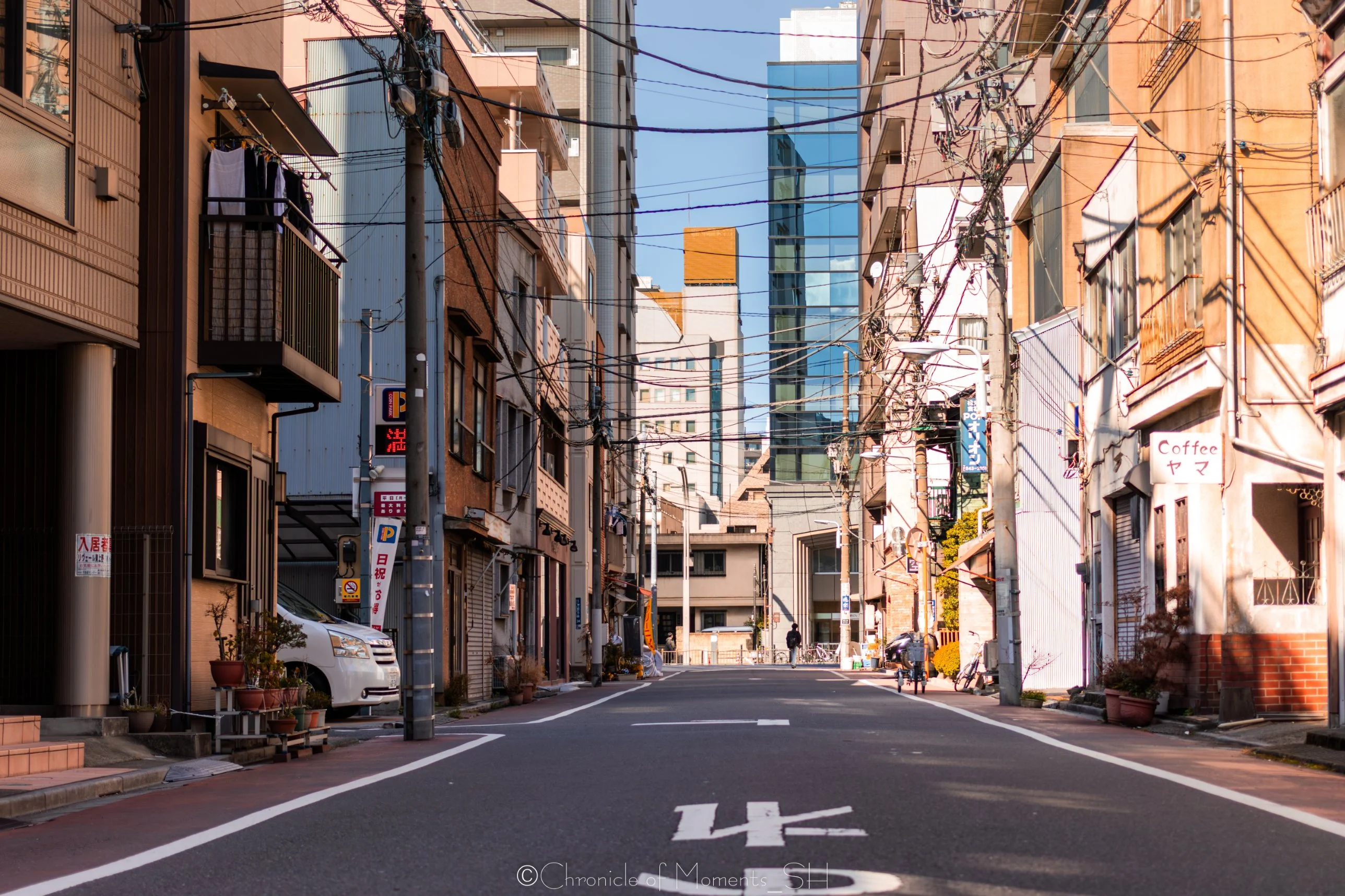
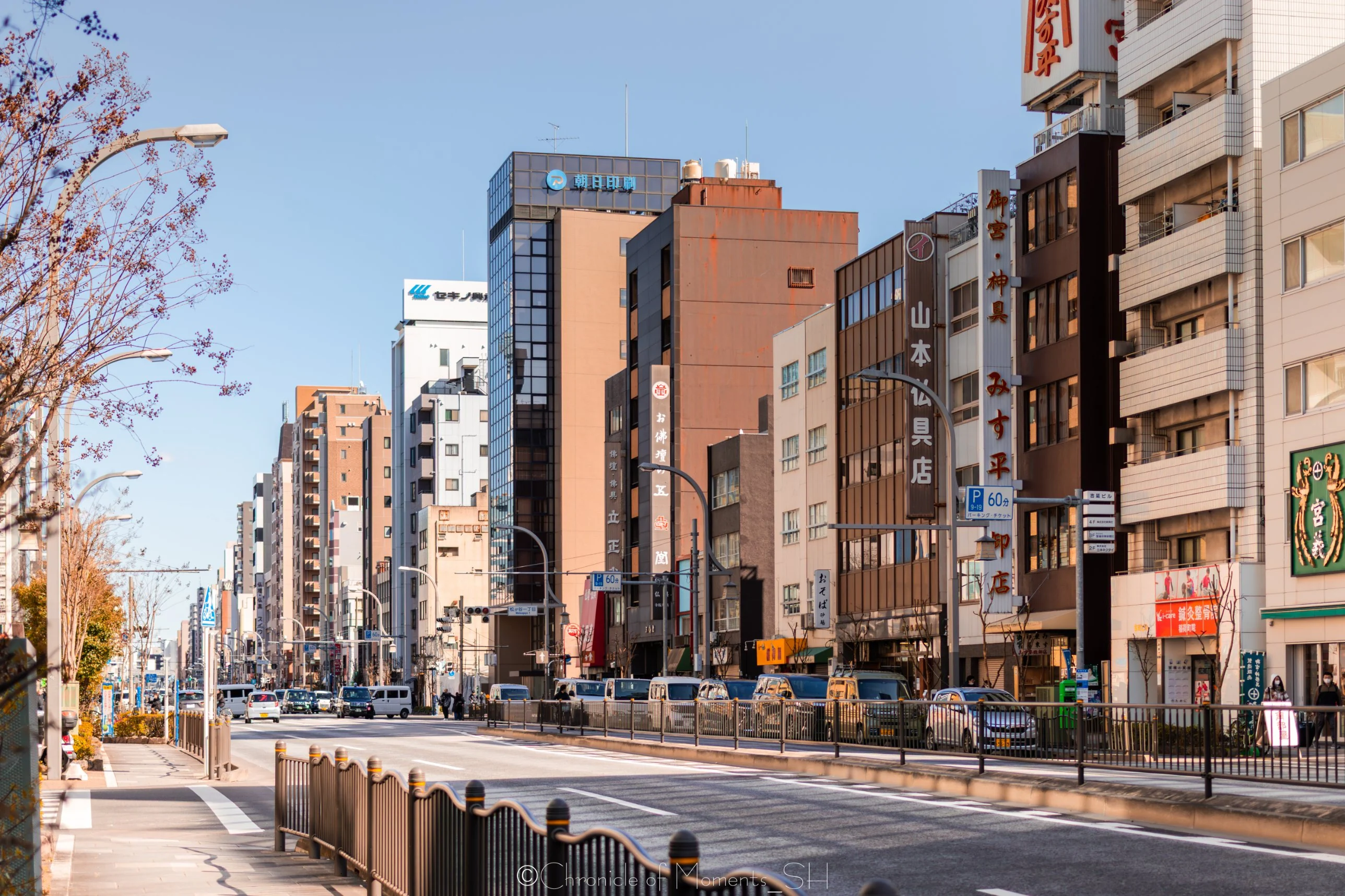
(Click a photo to view it at full size)
The two above were taken on the street on the first day of the trip. I captured the scenes that caught my eye as I walked, step by step, and this was the first time I felt that a single 40mm can capture the mood of a street well enough.
What Angle of View Is a 40mm Prime?
Before looking at more photos, let me pin down how wide 40mm is. The Canon EOS 800D has an APS-C sensor, so the displayed focal length multiplied by about 1.6 is the full-frame equivalent. That makes 40mm about 64mm on full frame, a standard angle of view of about 37° diagonal.
Take the 18-55mm commonly used as a kit zoom: that is about 29–88mm full-frame equivalent. You can change the angle of view from wide to medium telephoto from the same spot. A 40mm prime, by contrast, is just one angle, about 64mm equivalent, from start to finish.
If you wonder how to convert, see the Crop Factor Calculator and the Sensor Size and Crop Factor Guide. You can check your own lens's angle of view with the Camera Field of View Calculator.
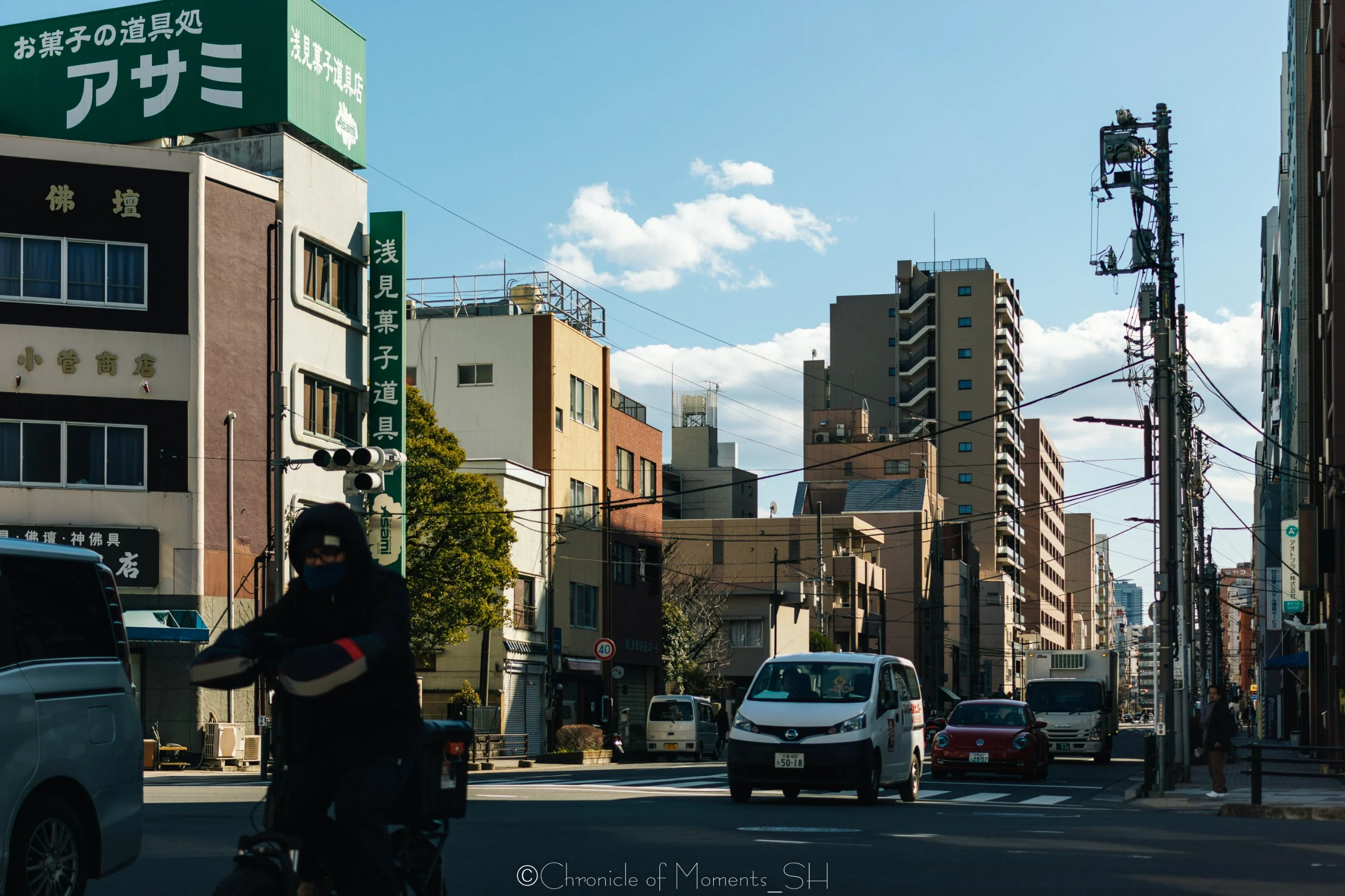
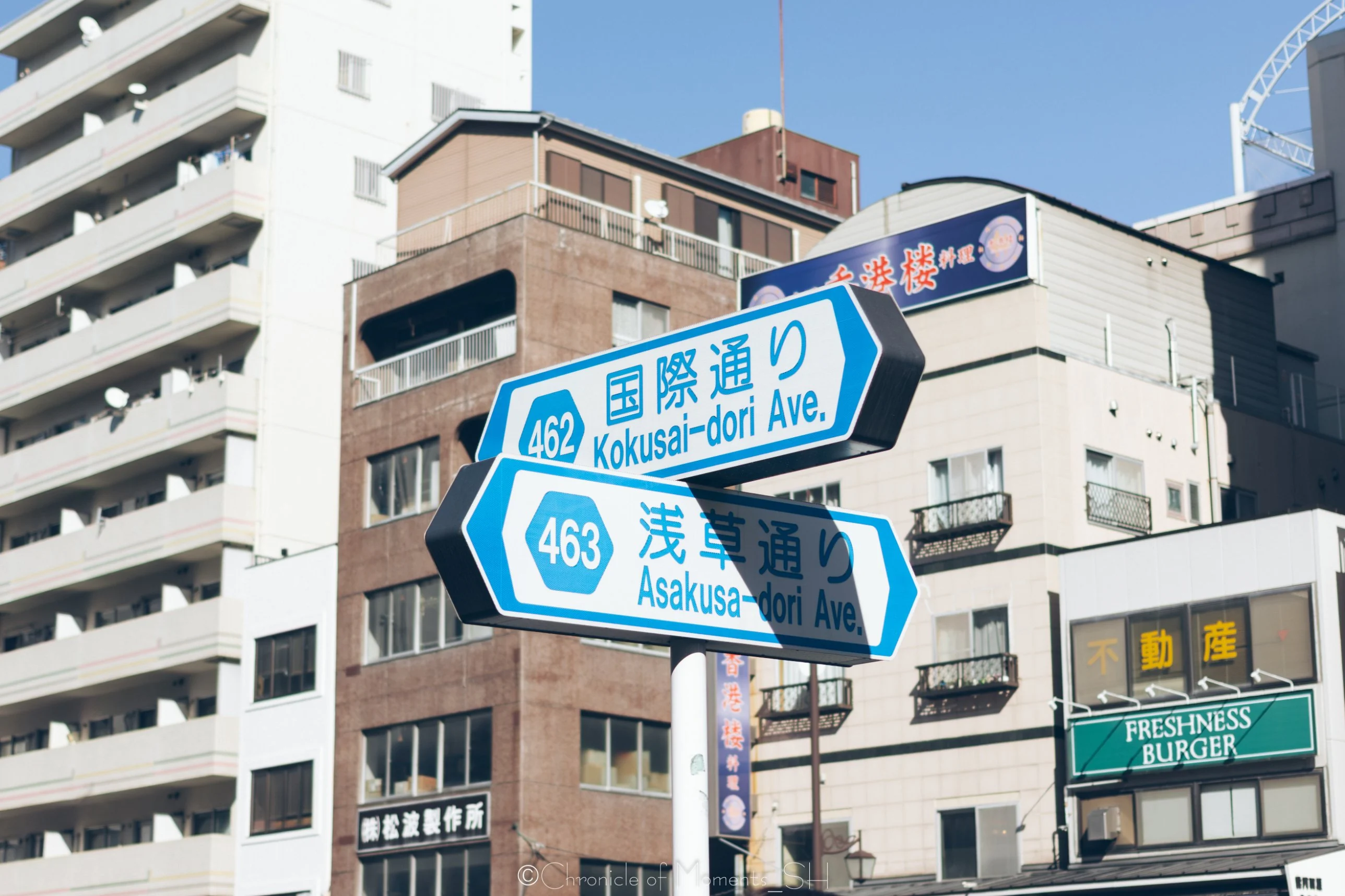
(Click a photo to view it at full size)
When capturing street signs and road signs like the two above, the 64mm equivalent fit comfortably. It captures a feel close to what the eye sees, so looking at the photos, the scenes I saw while walking come back naturally.
What Was Good About Walking Around with a Prime
The best thing was that it's light. The EF40mm f/2.8 STM is known to be a little over 2 cm long and about 130 g, so even mounted it barely adds bulk to the camera. On a trip where you walk all day, the weight on your bag and neck directly affects your stamina.
Another is that you don't have to agonize over lens choice. There's no need to change lenses, so you can press the shutter right as you walk, and there's no worry about dust getting in during a lens swap.
The brightness helps too. f/2.8 is brighter than the wide end of a dim zoom, so in daytime I could secure shutter speeds of 1/1000–1/3200 s even at ISO 100. That means shooting without worrying about shake.
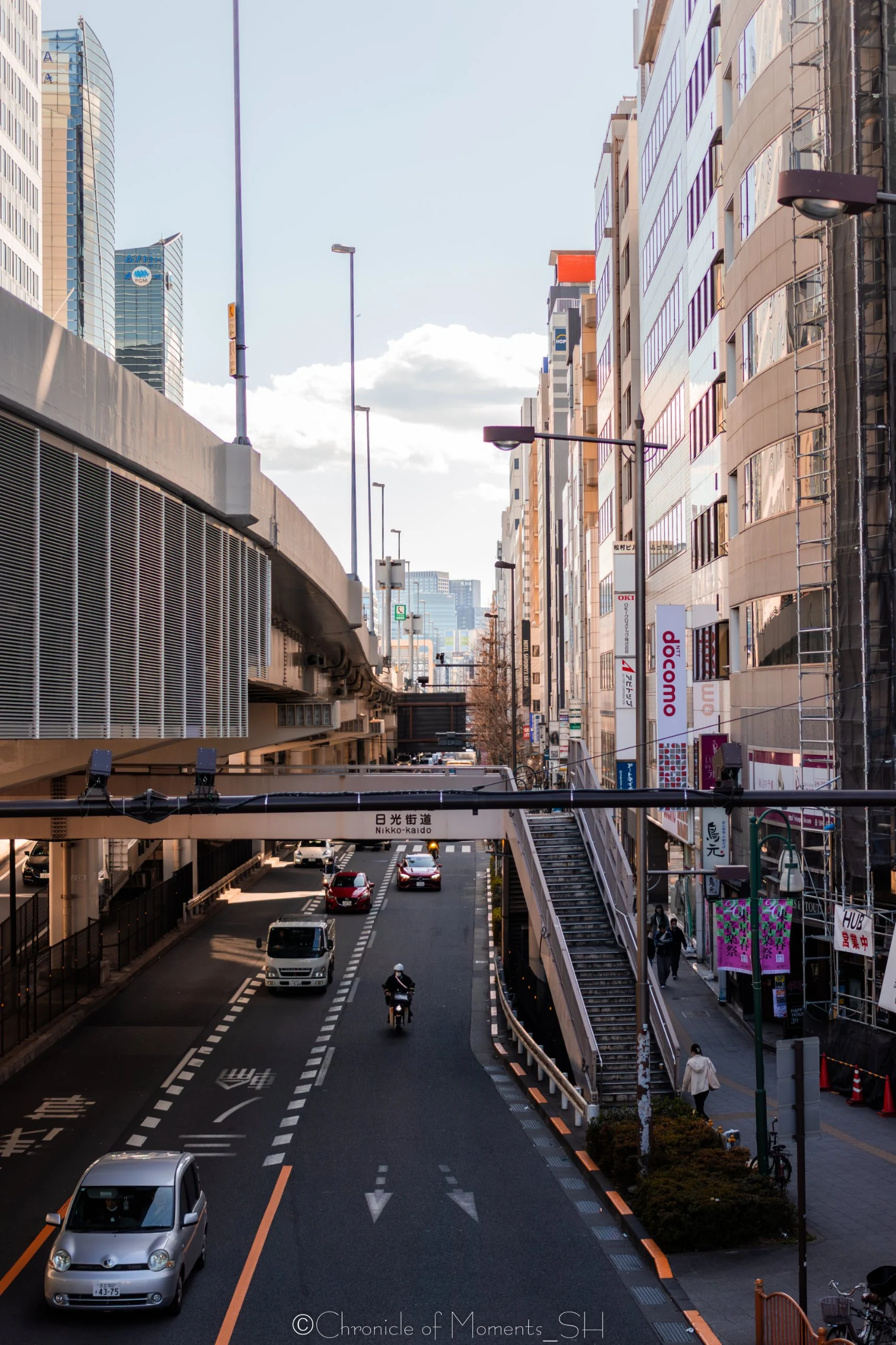
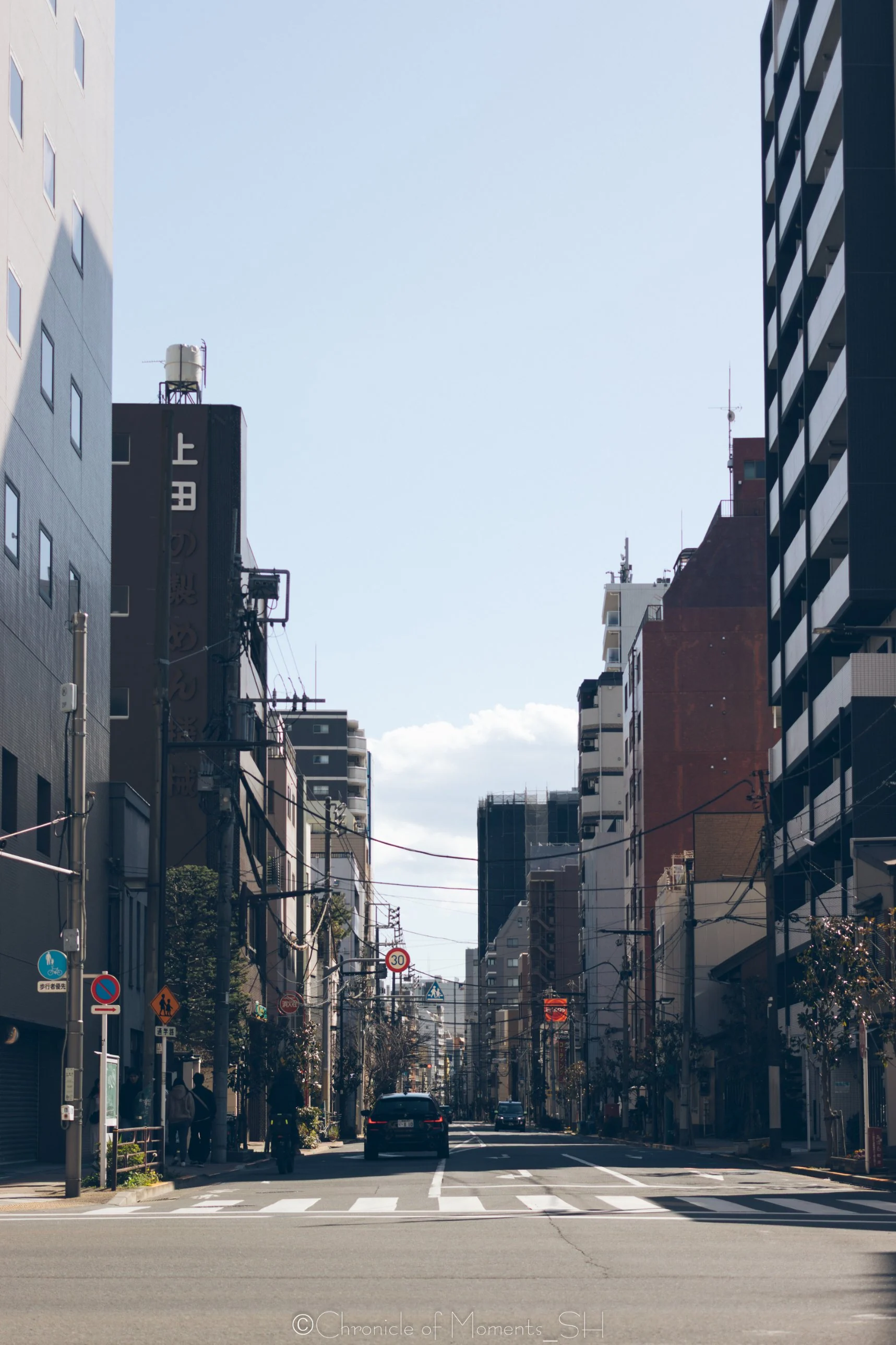
(Click a photo to view it at full size)
The two above are street photos in vertical composition. The shutter speeds came out at 1/1000 s or faster, so there was almost no shake even when shooting while walking. At a 64mm equivalent, handheld shots are safe if you don't go slower than roughly 1/60 s, and in daytime I had far more room than that.
Limit of a Prime ①: No Zoom, So You Zoom with Your Feet
The first limit I felt traveling with a prime was that there's no zoom. To change the angle of view, I have to move back and forth myself, which is commonly called zooming with your feet.
Zooming with your feet is not the same as turning a zoom ring. A zoom changes only the angle of view from the same spot, but moving changes the distance to the subject, so perspective and how much of the background you see also change. That can actually be an advantage because you can build more varied compositions, but when the road was narrow or crowded and I couldn't move, the limit was clear.
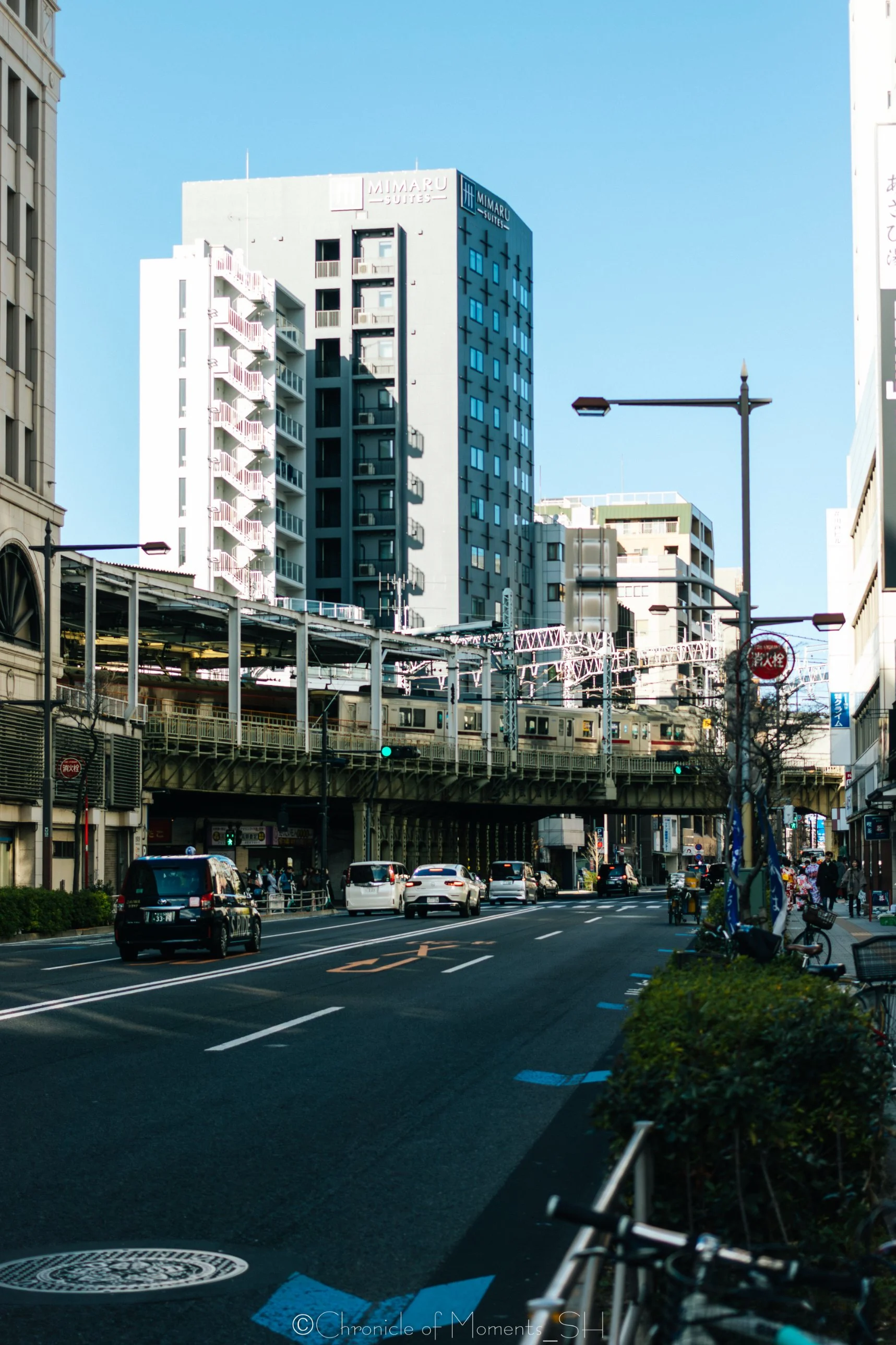
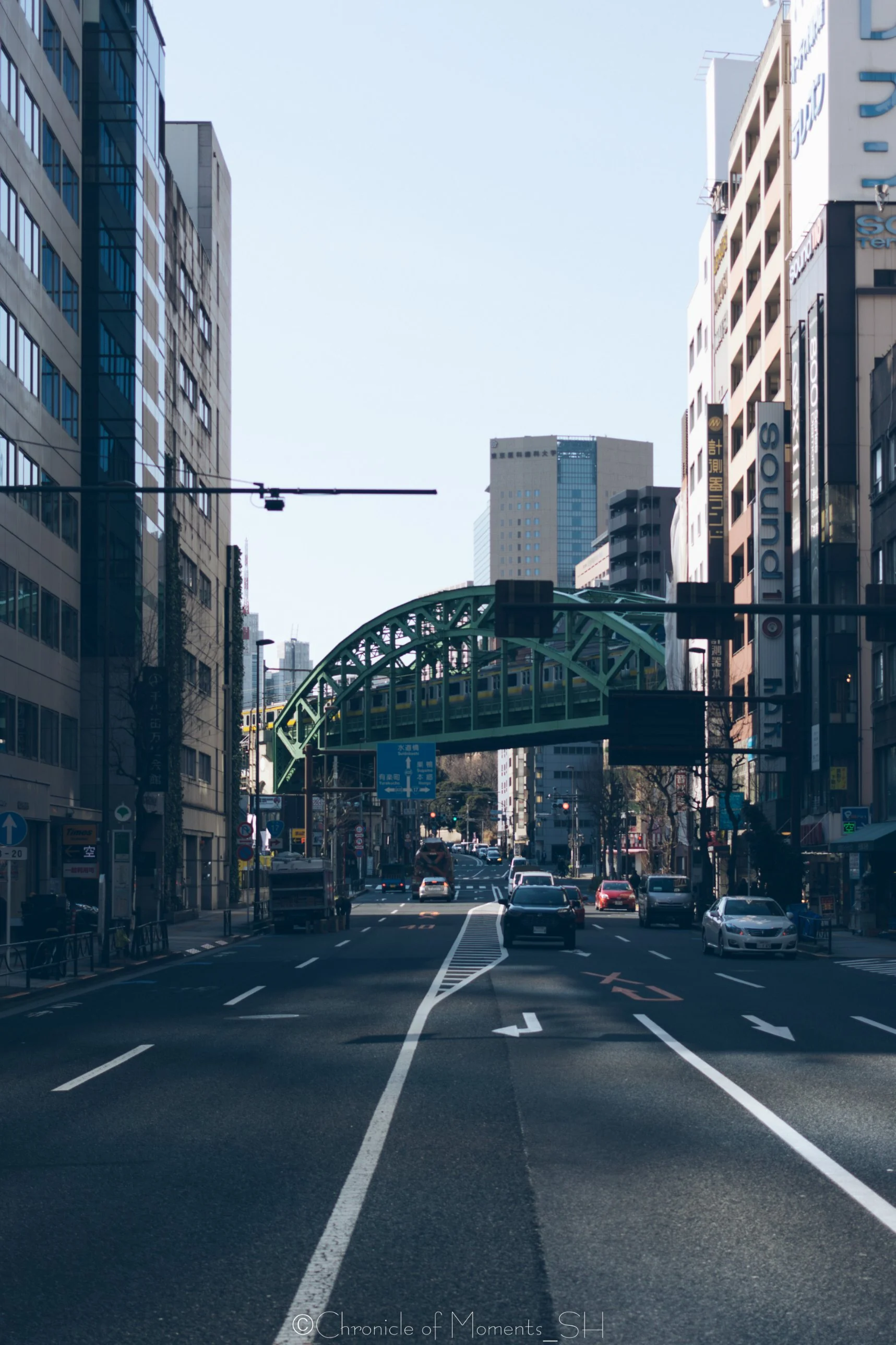
(Click a photo to view it at full size)
The two above were taken as I walked and moved forward. Scenes where a road continues were good for zooming with my feet, since I could move ahead and capture them closer.
Limit of a Prime ②: When You Can't Step Back or Move Closer
The problem is scenes where you can't. There were times I wanted the whole building in one frame but had no space to step back, so part of it got cut off. With a zoom lens you'd solve that by turning toward the wide end, but with a 64mm-equivalent prime the range I could capture was fixed.
Conversely, there were scenes where I wanted to isolate just one building but couldn't get closer. When it was across the road, or a road or railing kept me from going near, surrounding objects came in too and the main subject blurred. With a zoom lens, those are scenes where you'd turn toward the telephoto end and pick only the part you need.
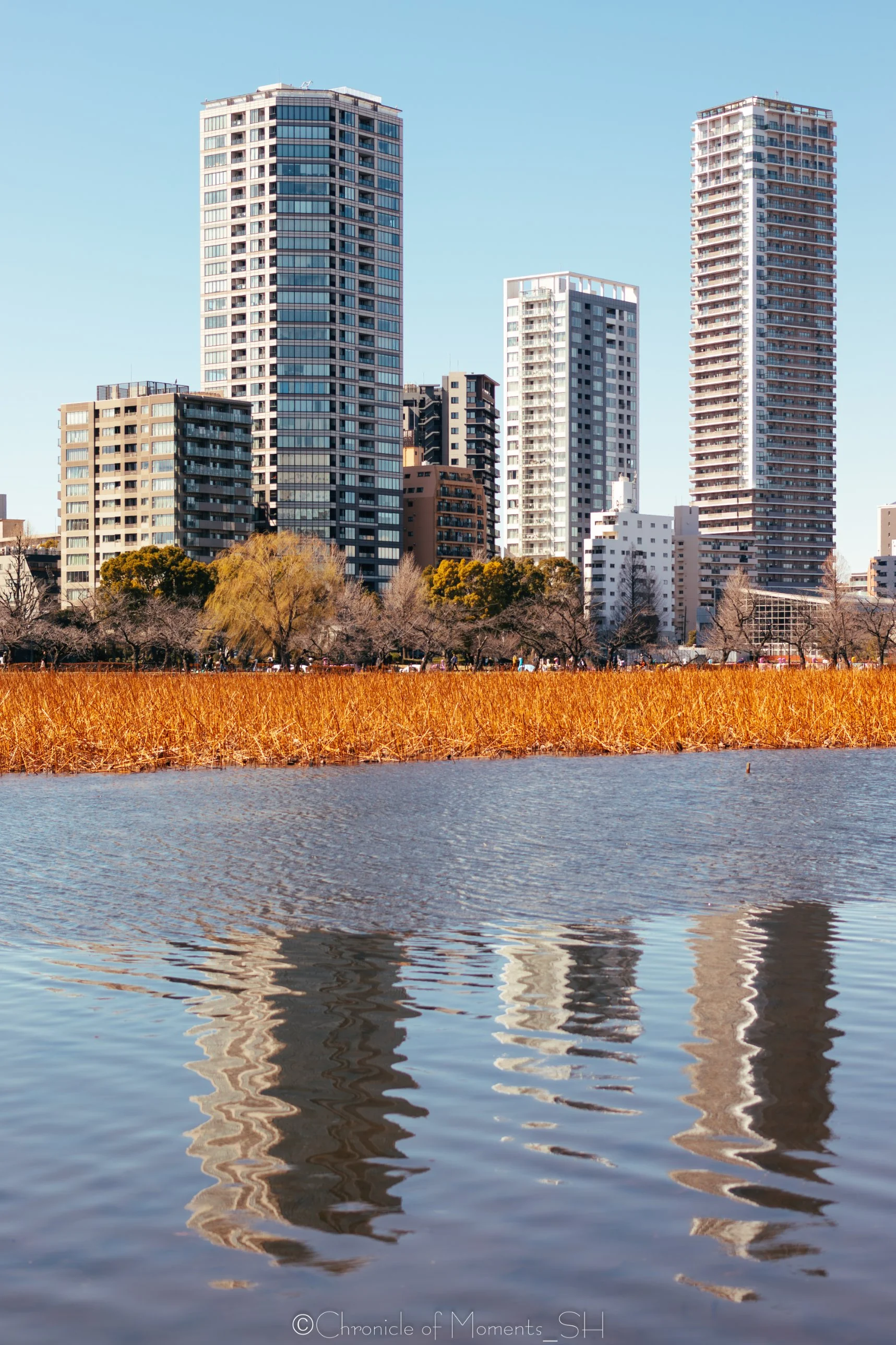
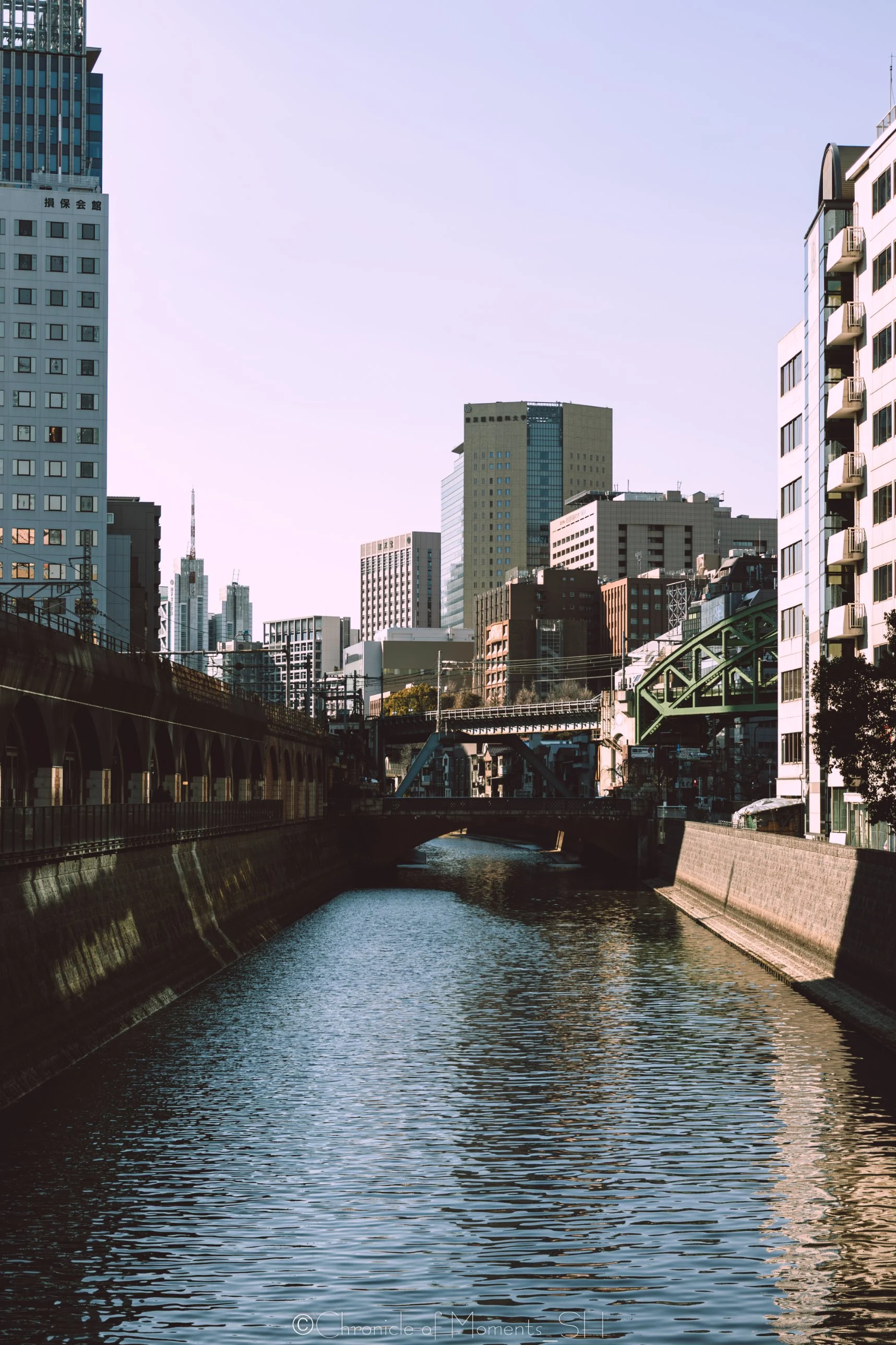
(Click a photo to view it at full size)
The two above were taken in scenery with water. By the water it is often hard to move farther forward or back, and in those cases a zoom lens would have let me build the composition much more freely.
Why I Kept the Photos Despite the Disappointing Compositions
Honestly, it's hard to say these photos have good composition. It was my first solo trip, and I didn't know much about lens characteristics or composition. Still, I'm including the photos as they are because I want to show that these are the kind of photos you actually get when you travel with a prime.
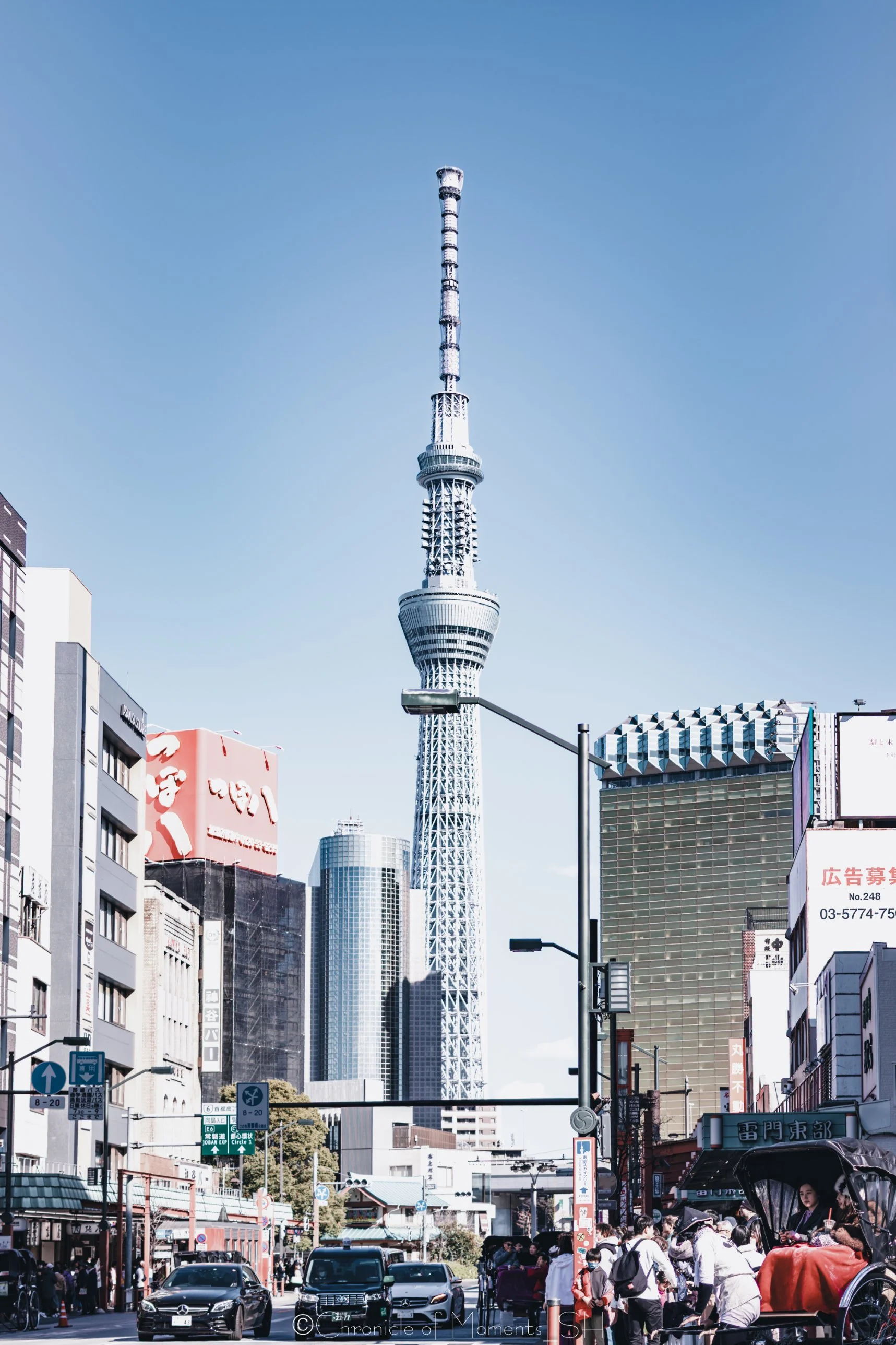
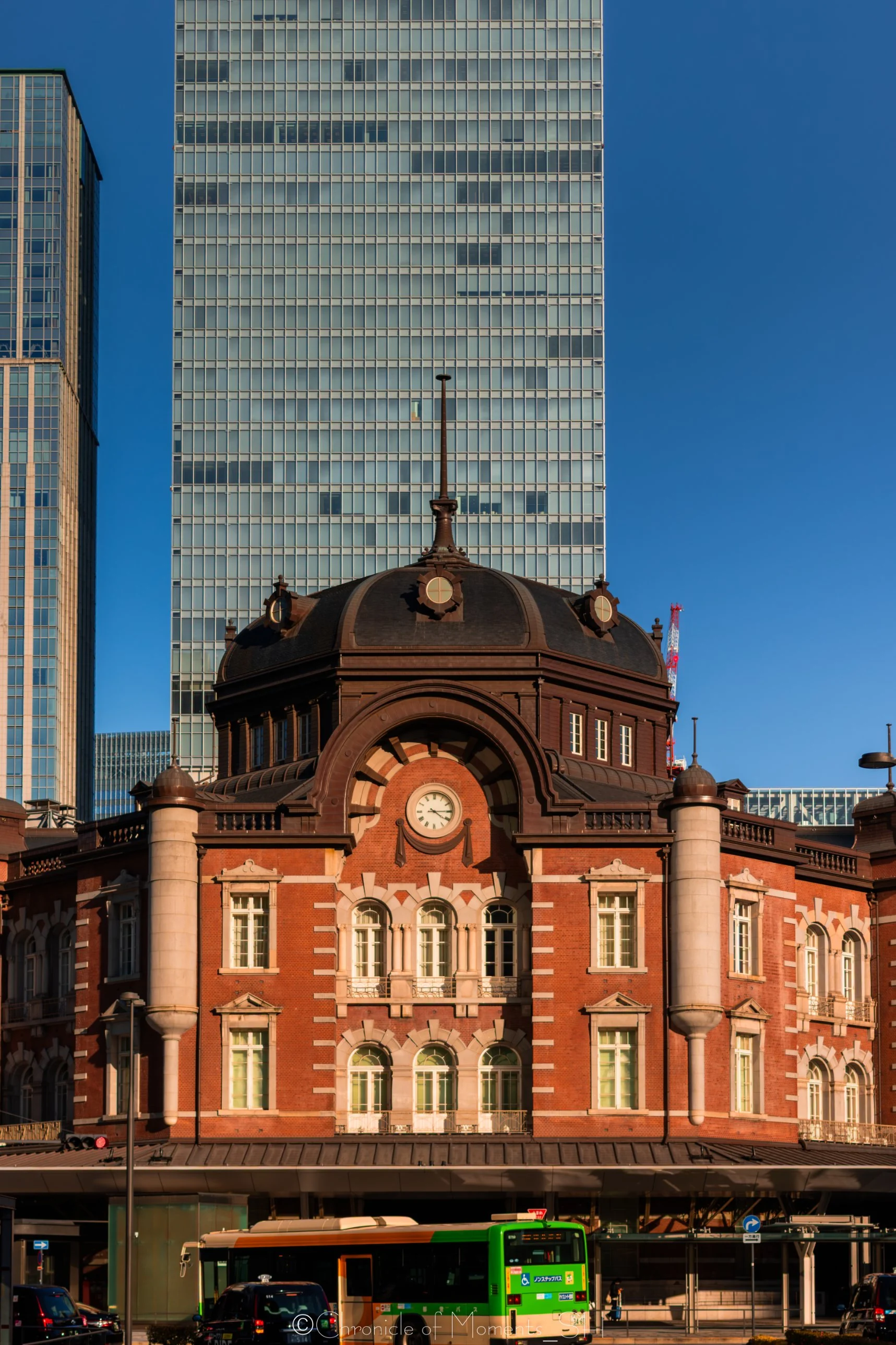
(Click a photo to view it at full size)
In one of the two above, the distant landmark came out small, and in the other I couldn't fit the whole building and captured only part of it. In moments like these, the regret of not having a zoom lens stayed with me the most.
In Crowded Places and Night Scenes
In crowded tourist spots, zooming with your feet is even harder. If you step back, people block the view in front, and if you go forward, you get in other people's way. In places like that, the convenience of a zoom lens felt big.
In night scenes, the brightness of a prime actually helped. Because f/2.8 is brighter than a dim zoom, I could use a faster shutter speed at the same sensitivity, and in many cases I could shoot handheld without a tripod.
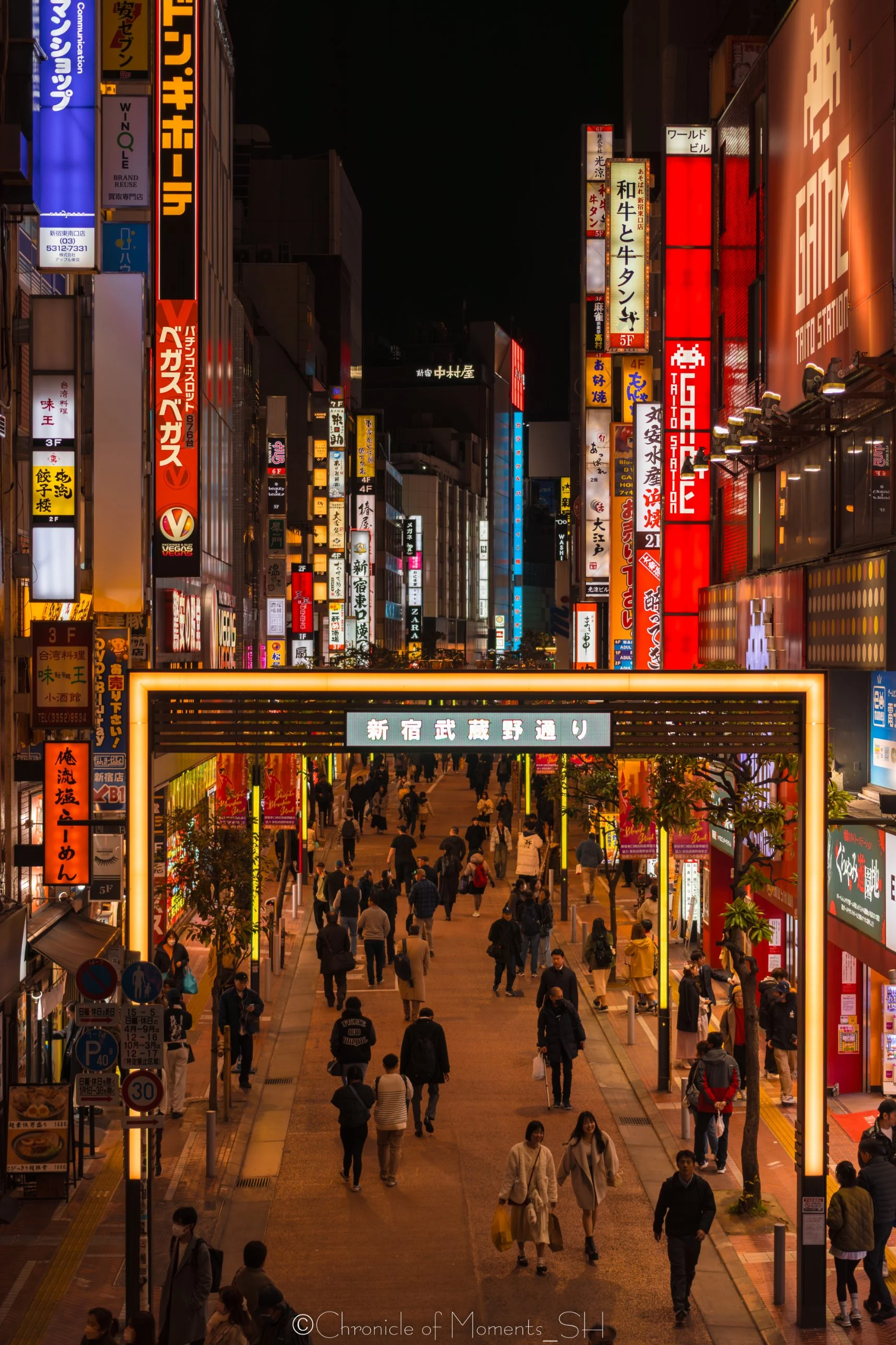
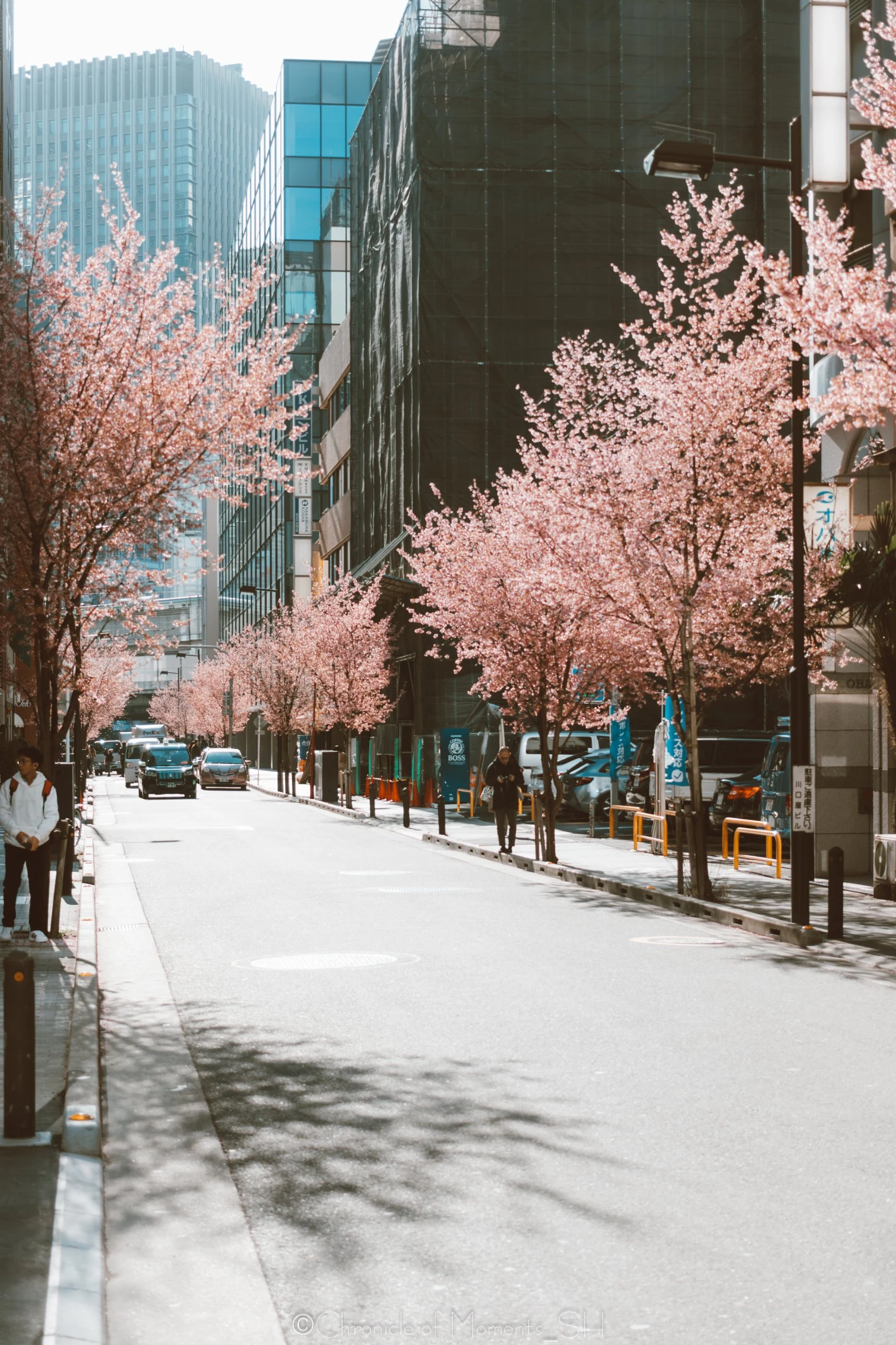
(Click a photo to view it at full size)
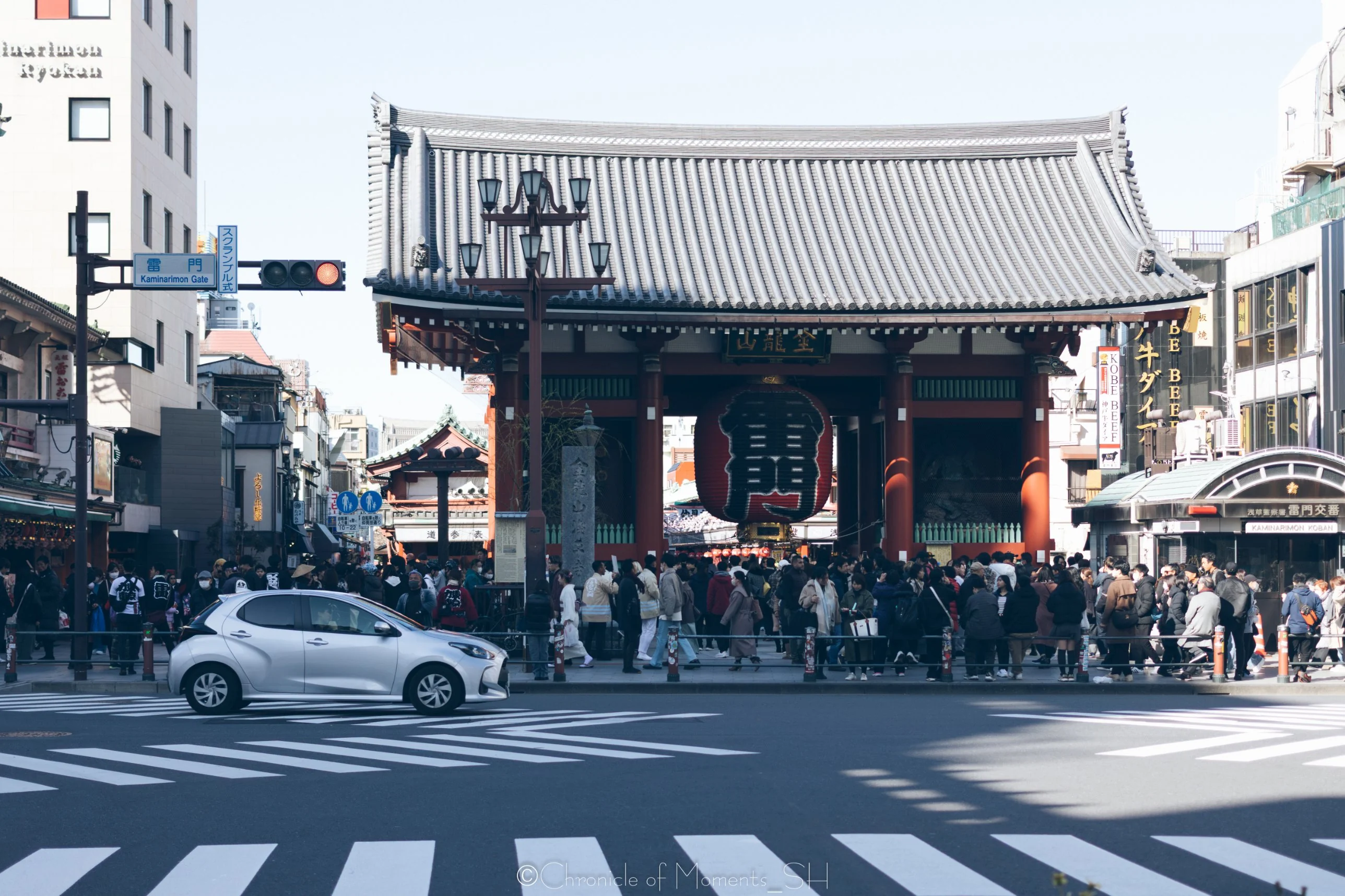
Canon EOS 800D · EF40mm f/2.8 STM · 40mm · F2.8 · ISO 100 · 1/800 s · 2024-03-10
Of the three above, the first two capture neon signs on a night street and a tree-lined road with cherry blossoms, and the last is a photo where zooming with my feet was hard in a place where people had gathered. Together they are examples where both the limits and the strengths of a prime show.
Prime vs. Zoom: The Difference on a Trip
Here is a simple summary of the two lenses for travel.
| Item | Prime (40mm) | Zoom (kit 18-55mm as an example) |
|---|---|---|
| Equivalent angle of view | about 64mm only | about 29–88mm |
| Weight and bulk | Small and light | Relatively large |
| Brightness | Fixed f/2.8, fairly bright | f/3.5 at wide end, f/5.6 at tele end |
| Composition control | You have to move | Possible with the zoom ring |
| Narrow spaces and crowded places | Disadvantage | Advantage |
| Lens changes | Not needed | Not needed (one lens solves it) |
There is no single right answer. It depends on the trip. If walking all day and cutting luggage come first, a prime; if you need to capture buildings, scenery, and people in variety, a zoom fits.
Checklist
- What will you shoot most on this trip: streets, scenery, people, or buildings?
- How many hours a day will you walk, and how much do you want to cut your bag weight?
- Have you worked out which angle of view you need using equivalent focal length?
- If you take a prime, are there many places where you can move back and forth?
- In case one lens isn't enough, do you have an alternative such as a kit zoom or a smartphone wide-angle camera?
Common Mistake: A First-Time Lens on a First-Time Trip
My biggest mistake was taking the prime straight on the trip without practicing with it beforehand. I didn't know how wide the lens's angle of view was, so I couldn't get a feel for how much would fit. Even one shoot around the neighborhood before the trip would have told me in advance which scenes would be hard.
Another was not thinking about equivalent focal length. A 40mm on an APS-C camera looks like a standard angle by the number, but it is actually about 64mm equivalent, so it captures a little narrower than what you see by eye.
FAQ
Is it OK to take only one prime on a trip?
Yes, it's possible. But if you'll often need to capture whole buildings or broad scenery, it may fall short. If it's a trip of walking lightly and capturing the mood of streets and people, it fits well.
Is a 40mm prime a suitable angle of view for travel?
On an APS-C camera it is about 64mm equivalent, a slightly narrow angle from standard. It may be narrow for capturing a whole landscape, and good for street photos, food, and small objects.
If I had to pick just one, zoom or prime?
If you need to capture a variety of scenes on one trip, a zoom is the safe choice. If lightness and brightness matter more, consider a prime.
Is zooming with your feet the same as turning a zoom ring?
No. A zoom ring changes only the angle of view from the same spot, while moving changes the distance to the subject, so perspective and how much background you see change together.
Putting It Together
On a trip, a prime is light and bright, good for shooting while walking, but with no zoom the limit is clear in scenes where you can't step back or move closer. A zoom, on the other hand, is convenient but adds weight and bulk. It is best to decide the nature of your trip and the scenes you'll mainly capture first, then choose the lens that fits. If you're unsure about lens choice, also read the Prime vs. Zoom Lens Guide.
Copyright Notice
All photos used in this post are works taken directly by the site operator (Chronicle of Moments_SH). Photographs are protected as photographic works under Article 4(1)(ix) of the Korean Copyright Act, and copyright arises from the moment of shooting without any registration or other procedure (Article 10(2)).
Without the copyright holder's prior permission, it is prohibited to reproduce the photos in this post (Article 16), to post or transmit them on blogs, forums, social media, or communities (public transmission, Article 18), or to modify or edit them into derivative works (Article 22). Removing or altering the copyright notice and frame in a photo can also infringe the right of attribution (Article 12) and the right to integrity (Article 13). Uses the law permits, such as fair quotation of a published work (Article 28) or use within a private or domestic scope (Article 30), are exceptions.
Unauthorized use can lead to injunction claims (Article 123) and damages claims (Article 125), and can be punished by imprisonment of up to 5 years or a fine of up to 50 million won (Article 136(1)). For-profit or habitual infringement can be punished even without a complaint (Article 140).
Photo-use inquiries: skysmoga@gmail.com
© Chronicle of Moments_SH. All rights reserved.